
Issue No. 95

StudioworksJournal
Sanctuary
Come home to your creative self, where quiet moments and the beauty of slowing down make room for new possibilities.

A Season of Quiet Return
After a season of movement, teaching, and creative exploration, November invites me to slow down and return to my art.
By the time this issue reaches you, I will have just come home from Scotland, my sixth and final retreat of the year. For months, my creative life has moved through airports, classrooms, borrowed studios, sketchbooks, and the beautiful places where I have been lucky enough to teach. Now the suitcases can finally stay put for a while.
I can feel the season changing with me. After so much outward movement, I am ready to turn toward my own studio again. Portugal is home now, but it is still a young home for me. We only moved here in 2025, and I am still learning its rhythms, its light, and what November feels like here. I think that is part of what makes this month feel so meaningful. I am coming home while I am still making home.
This issue is about sanctuary, and for me that means giving creative life a place to settle. A table that can stay messy. Work that can remain out overnight. A few quieter weeks where an idea is allowed to take its time.
I have been thinking about wintering as a creative season too. Less travel. Less outward energy. More tending, noticing, and returning to what has been waiting patiently at home.
Perhaps that is the invitation for November: to make a little room around the work we want to keep close.
“A woman must have money and a room of her own if she is to write fiction.” — Virginia Woolf

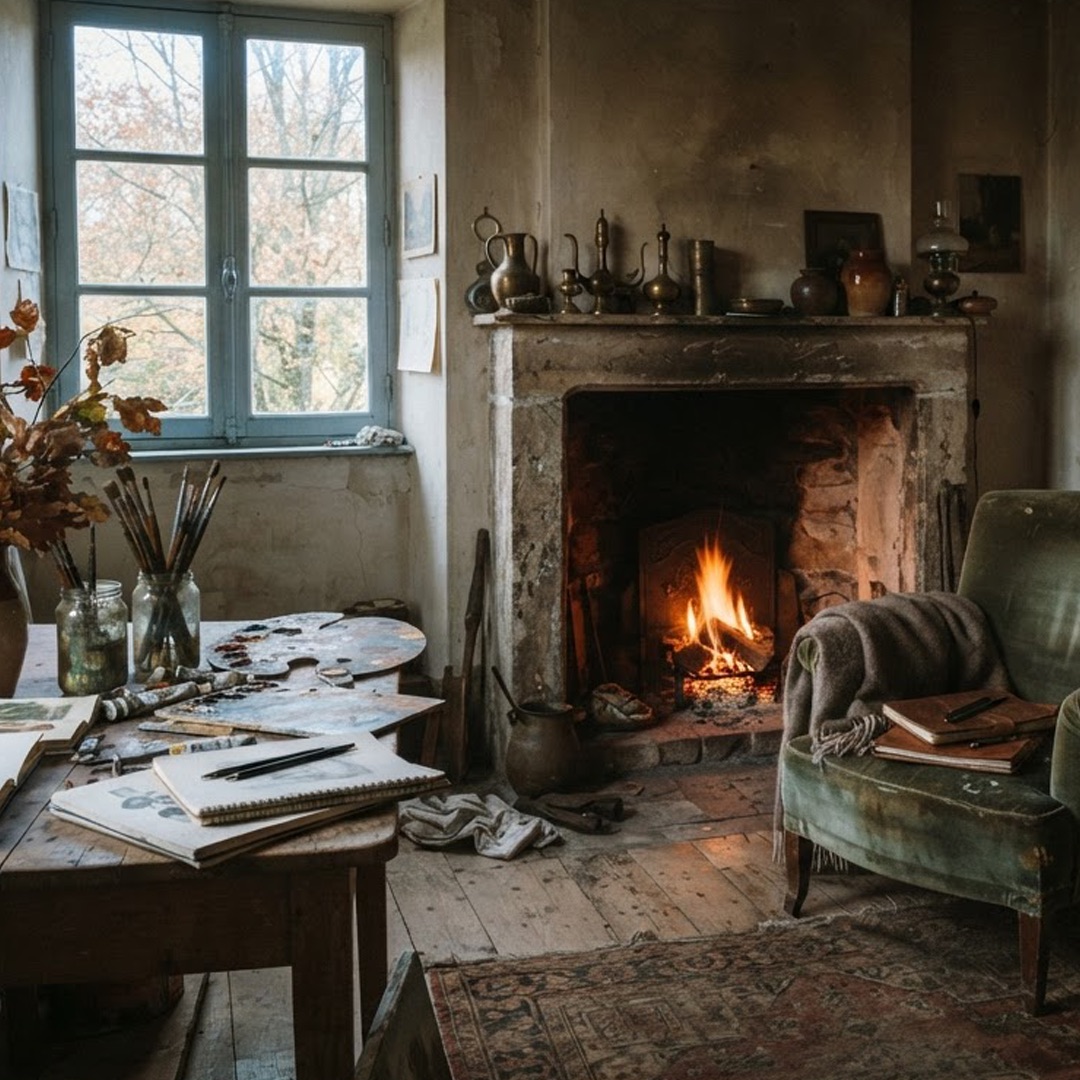
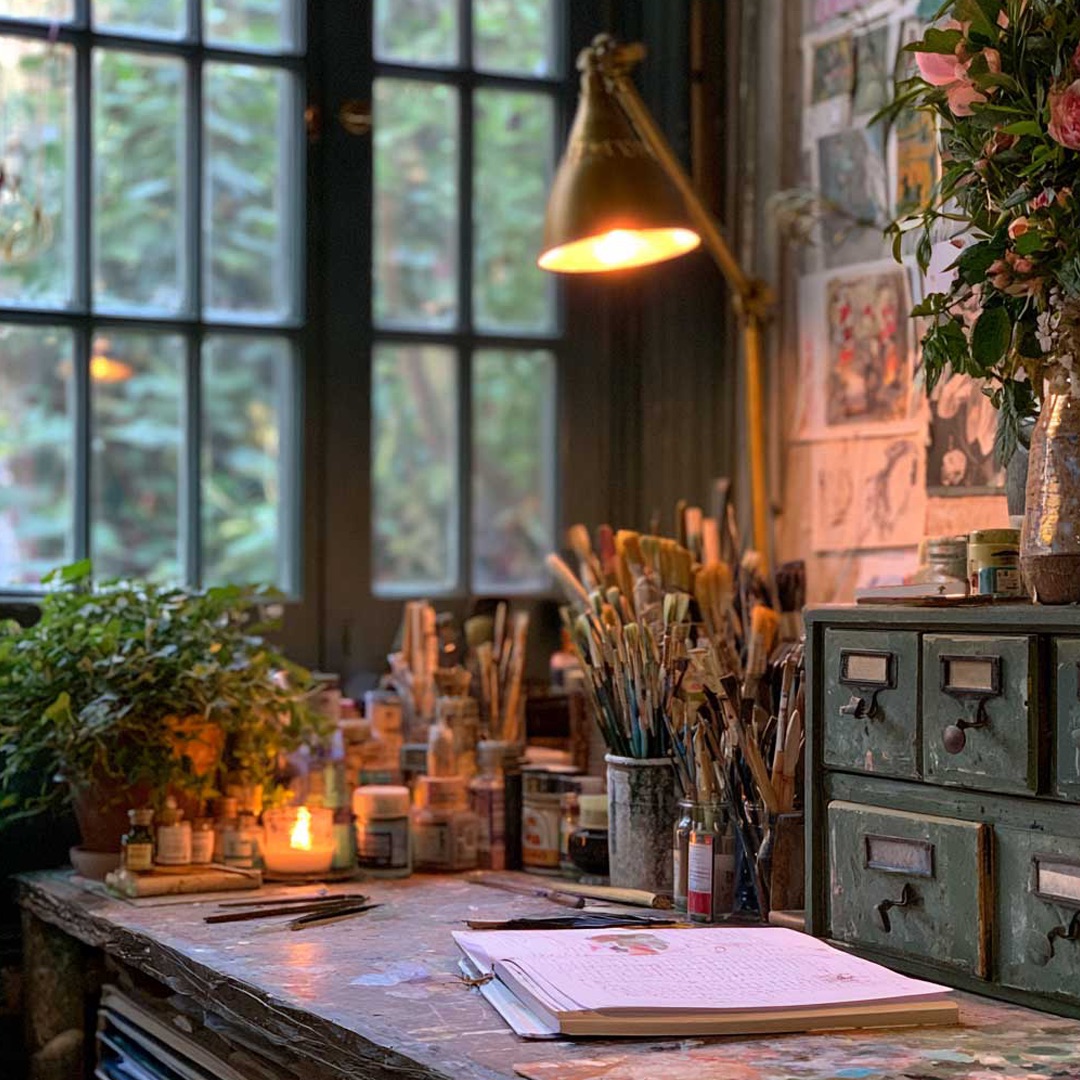

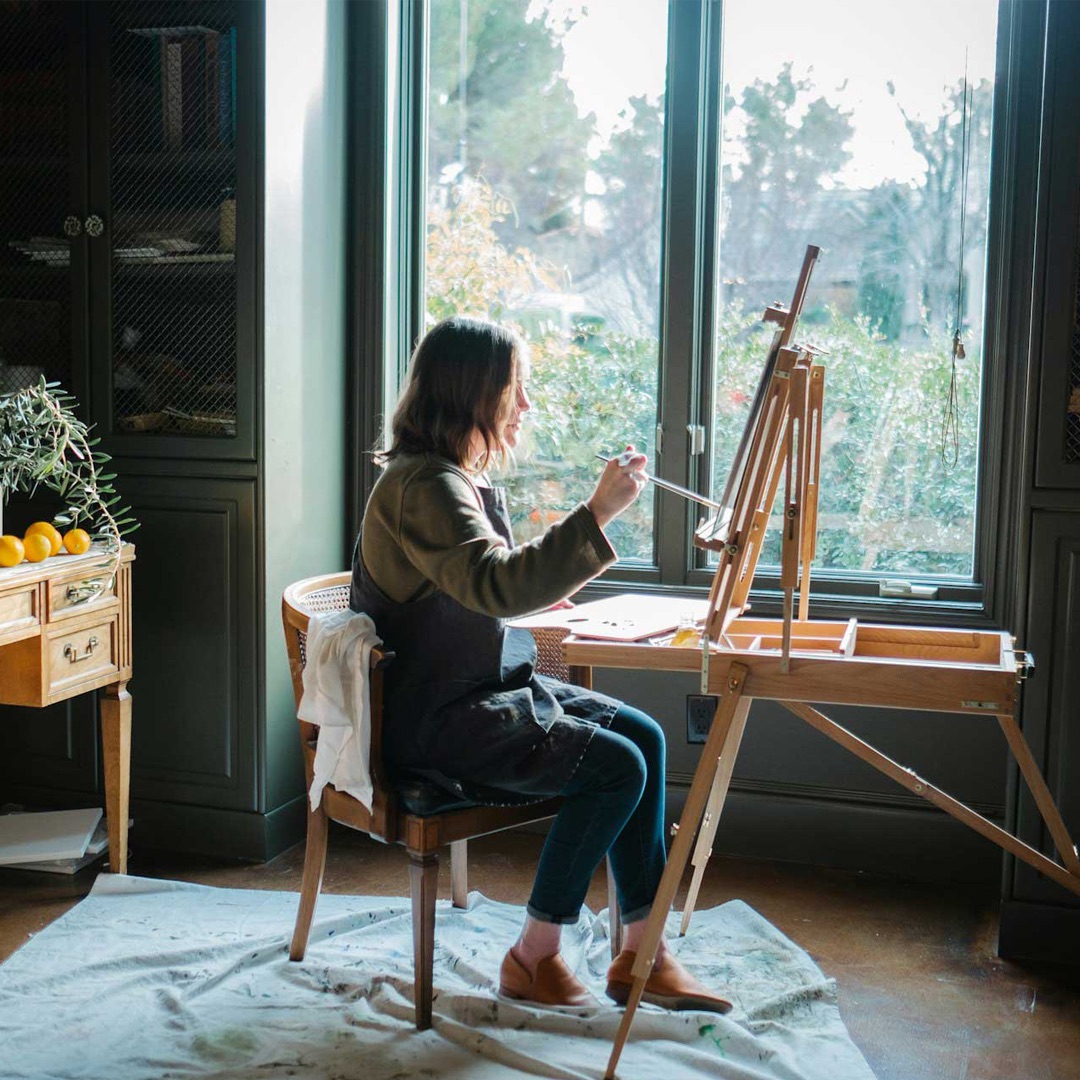
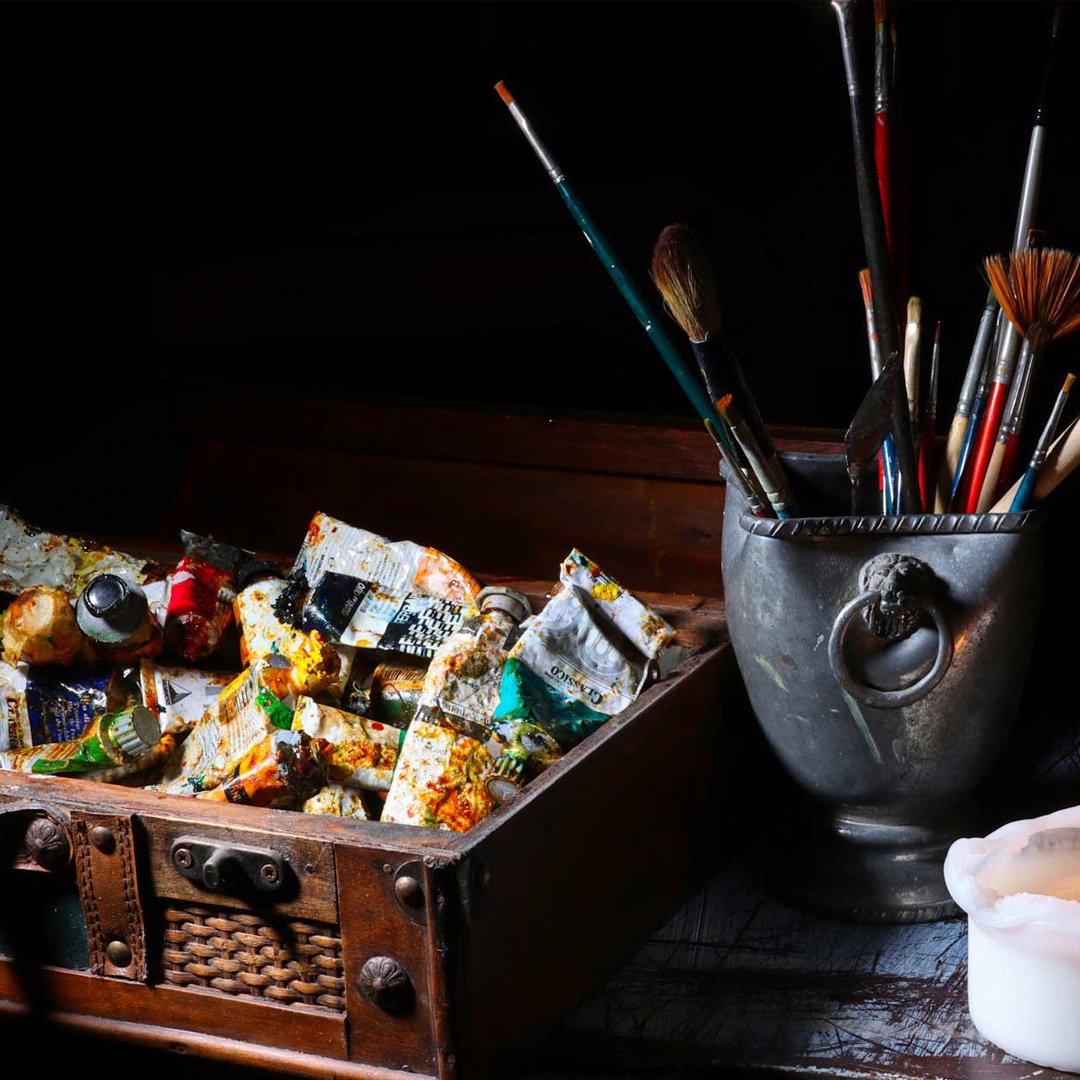
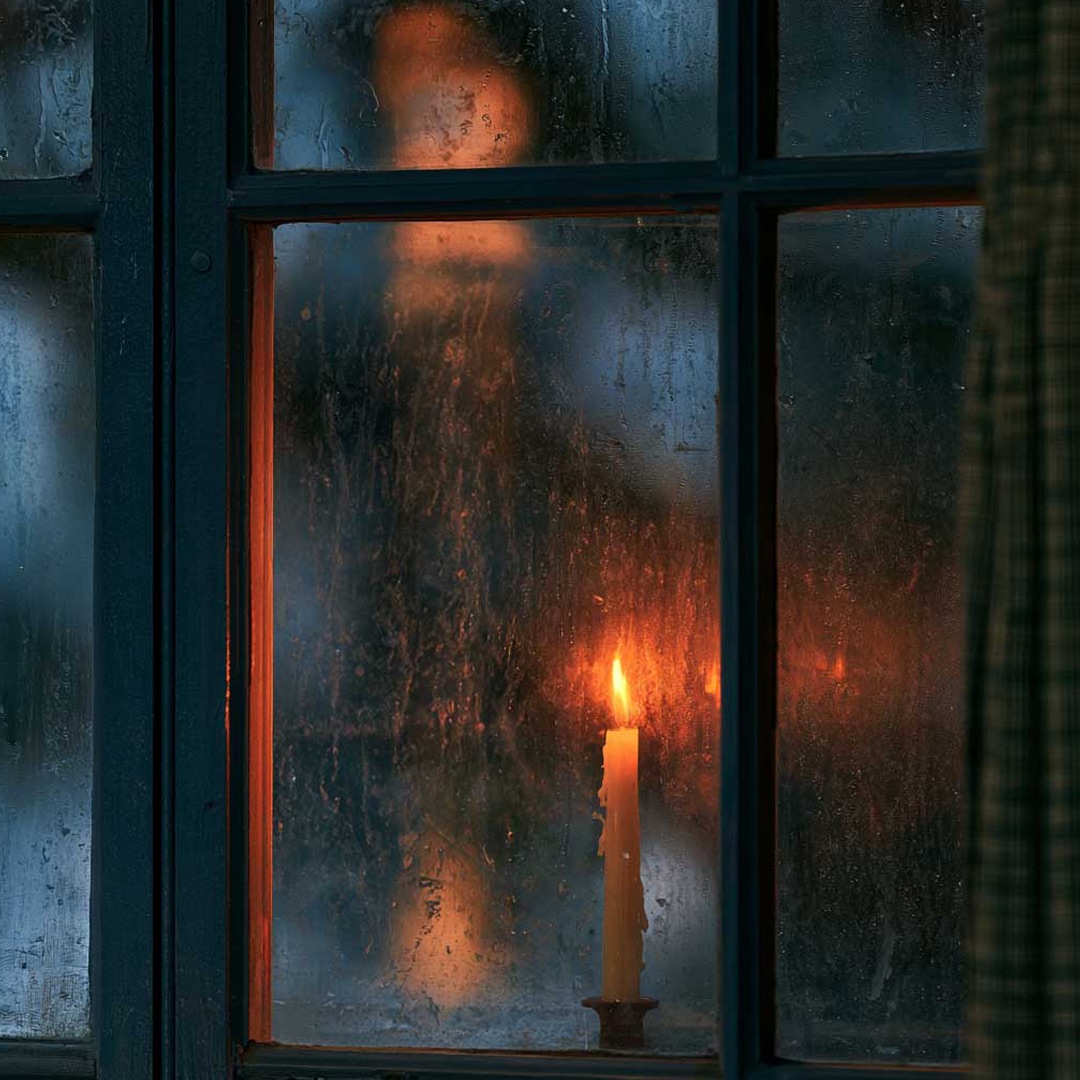
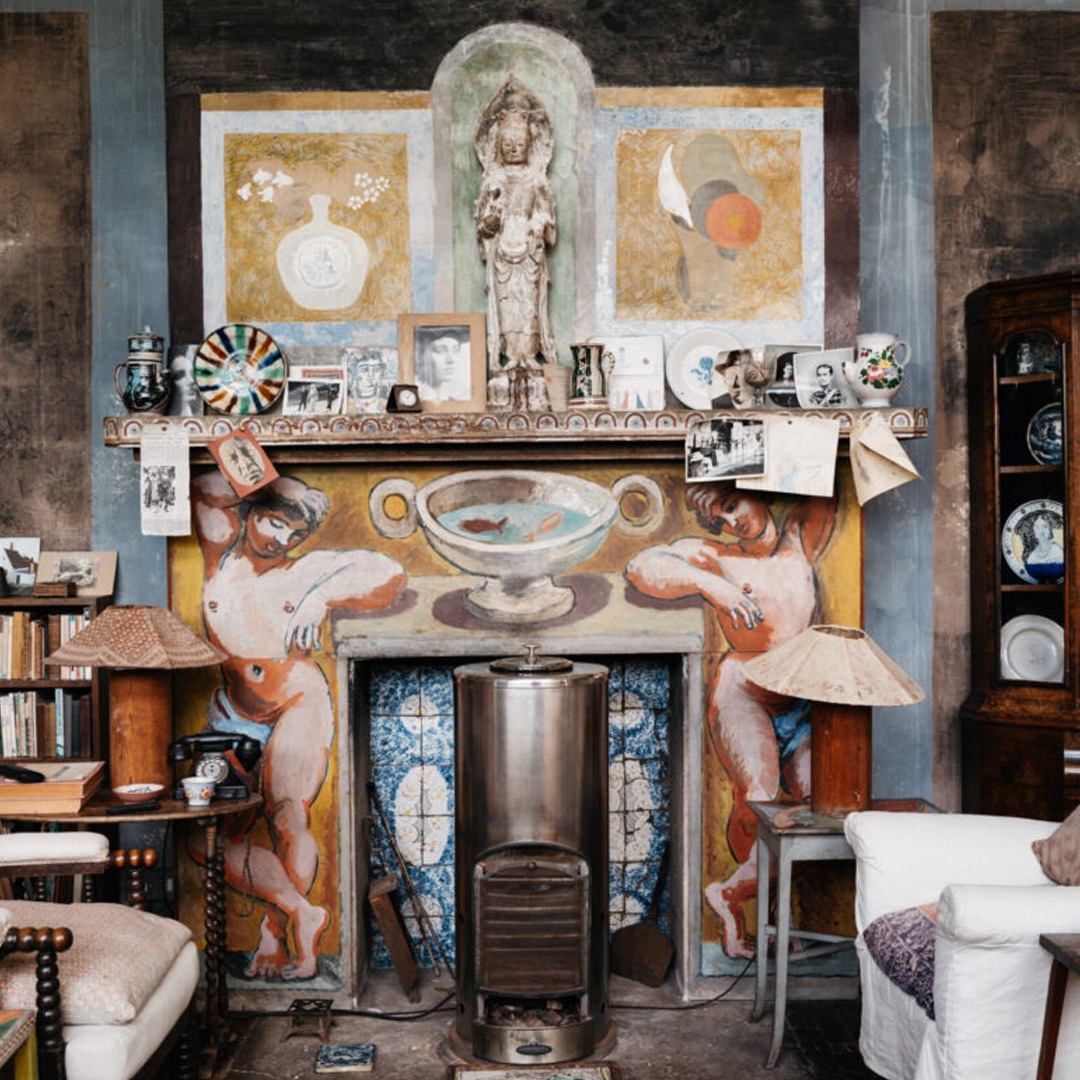

The Artist’s Room:
A History of Creative Space
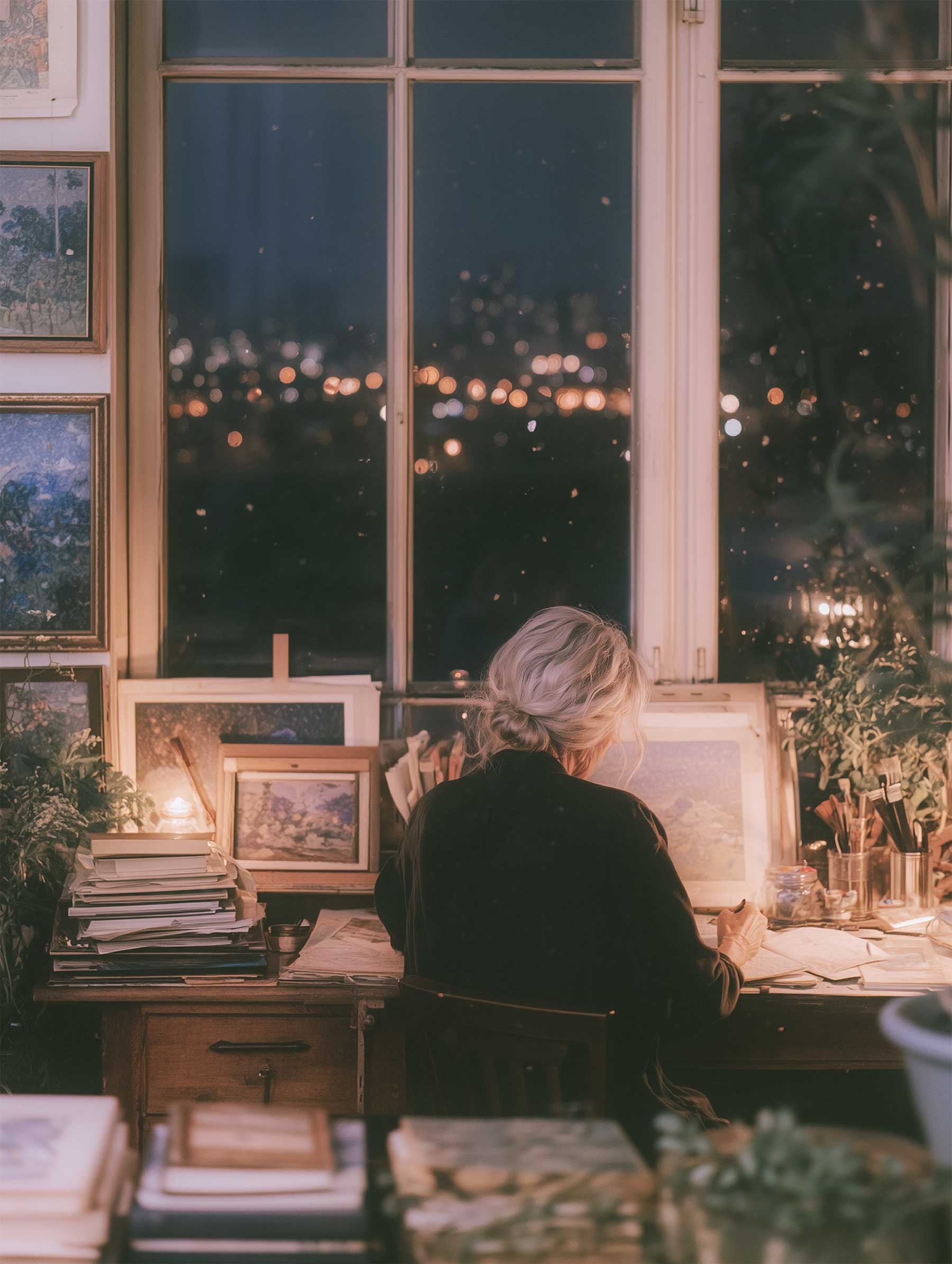
November brings the room back into focus. Windows close earlier. Lamps come on while there is still work on the table. The garden may still be visible, but the day begins to gather us indoors.
For artists, the interior has never been a neutral backdrop. Where art is made affects who can make it, how long they can work, what they can see, and even what kinds of subjects become available. The private studio that we now picture so easily, a solitary artist surrounded by brushes and unfinished canvases, is only one chapter in a much longer history.
Before the Private Studio
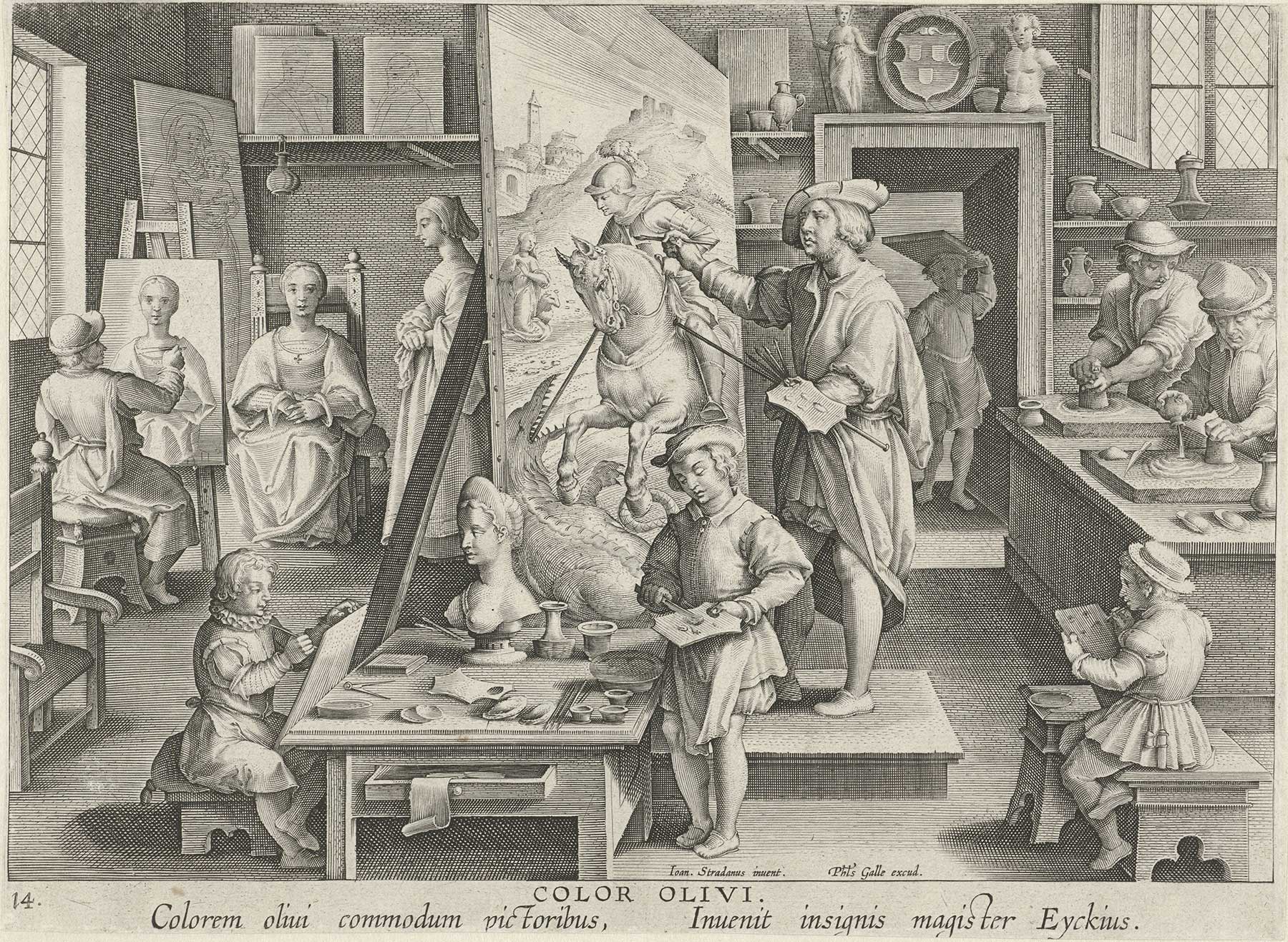
In the Renaissance workshop, making art was often communal, practical, and busy. Young apprentices entered a master’s shop at an early age and learned by working. They swept floors, ground pigments, prepared panels, gilded surfaces, copied drawings, and gradually took on more difficult parts of commissions. Large paintings could involve several hands. The workshop was a place of production as much as contemplation.
That older model matters because it reminds us that the romantic image of the artist alone in a silent room is relatively modern. For centuries, artistic skill grew inside a shared working environment. Space was tied to training, patronage, trade, and access.
And access was never distributed evenly.
A Woman Painter’s Room
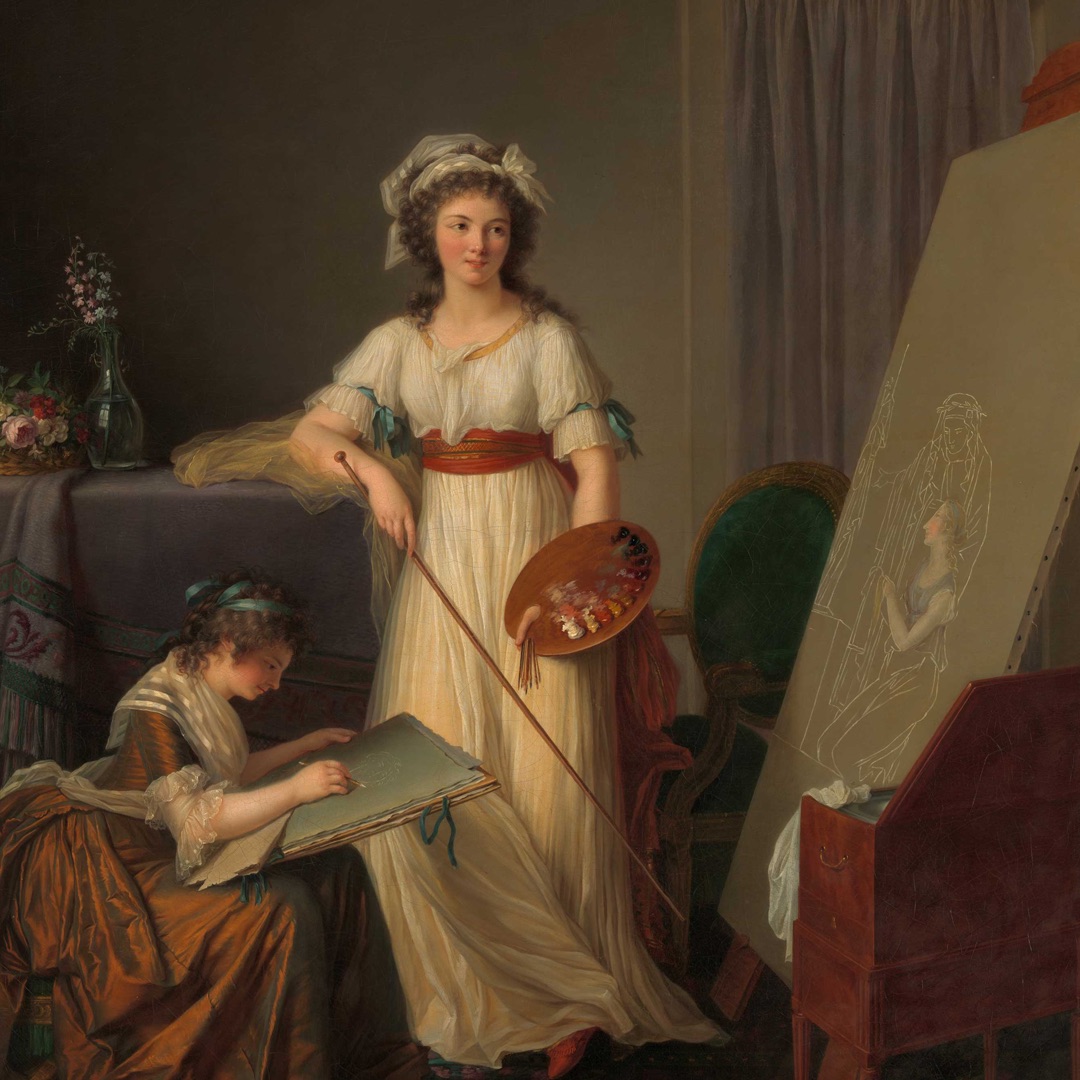
Marie Victoire Lemoine’s The Interior of a Woman Painter’s Studio, painted in 1789, makes that question of access visible. The scene appears calm: women inside an atelier, canvases nearby, art being made. Yet one detail gives the painting a sharper edge. On the easel is a history painting, the category the French Academy placed at the top of its hierarchy and one women were generally discouraged from pursuing.
The Metropolitan Museum of Art notes that Lemoine’s painting may represent the artist with her sister, Marie Denise Villers, who also painted. Lemoine could not show the work at the Paris Salon until 1796, after post-Revolutionary reforms broadened women’s access to the official art world.
The room in this painting is more than an interior. It represents permission. Tools are present. Ambition is visible. The women belong there.
When the Home Became the Subject
By the nineteenth century, the domestic interior had become an important subject in modern painting, but women often arrived at it under very different conditions from men. In France, women seeking professional artistic careers had fewer opportunities for formal training. They were excluded from the École des Beaux-Arts until 1897, and social conventions limited access to many of the cafés, dance halls, and urban spaces their male colleagues painted freely.
Berthe Morisot worked inside those restrictions and refused to let them shrink the seriousness of her art. Drawing rooms, gardens, bedrooms, nurseries, balconies, and women absorbed in everyday activity became part of her visual language. These spaces can look intimate, but they are never merely decorative. Morisot’s loose, quick handling keeps them unsettled and alive. Curtains shift. Dresses dissolve into brushwork. A room becomes a field of color and motion.
For women artists of her generation, domestic space could carry contradiction. It could be a limitation imposed by convention and also the place where a radical modern painting was made.
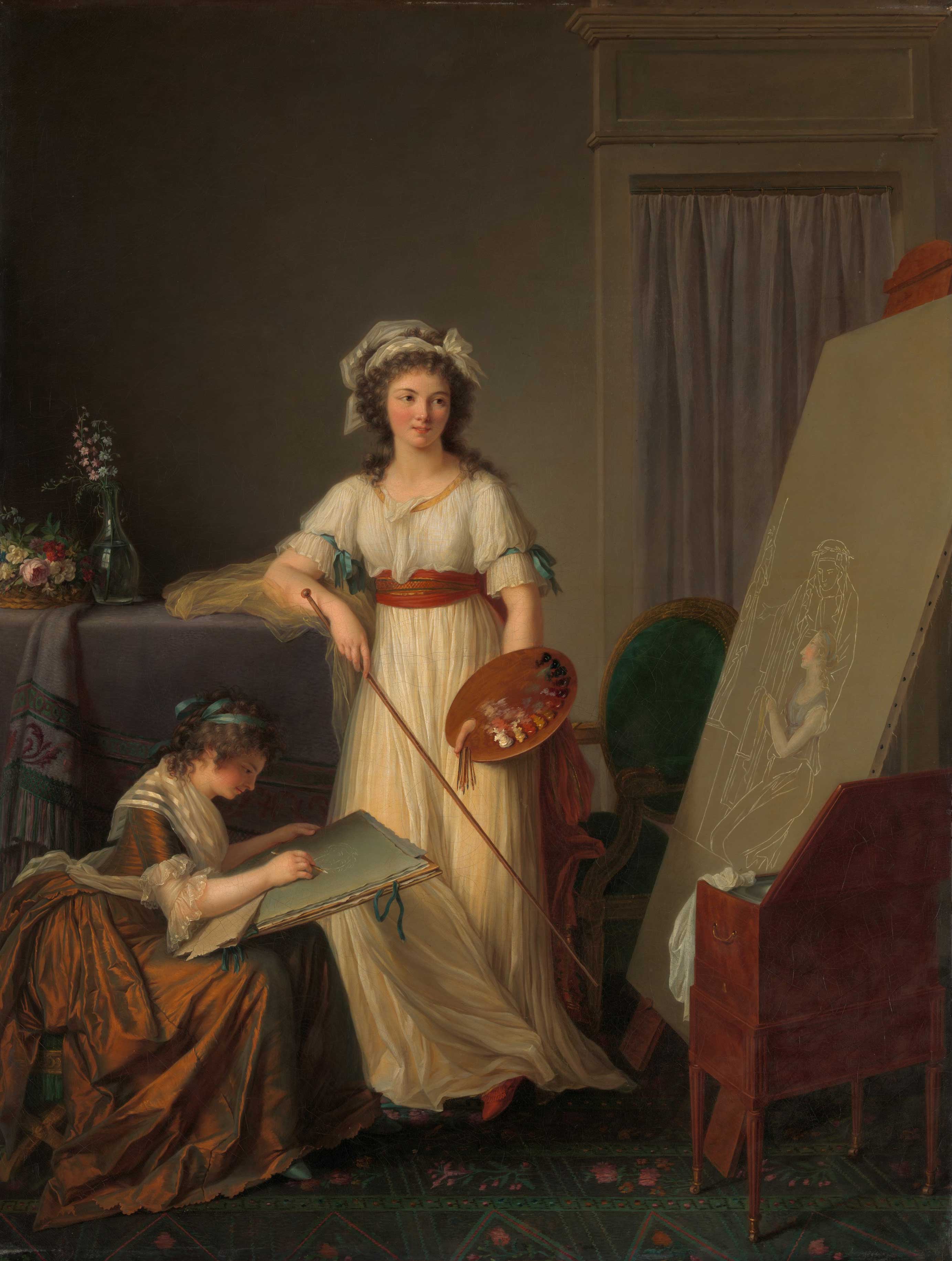
The Interior of a Woman Painter’s Studio
Marie Victoire Lemoine, 1789
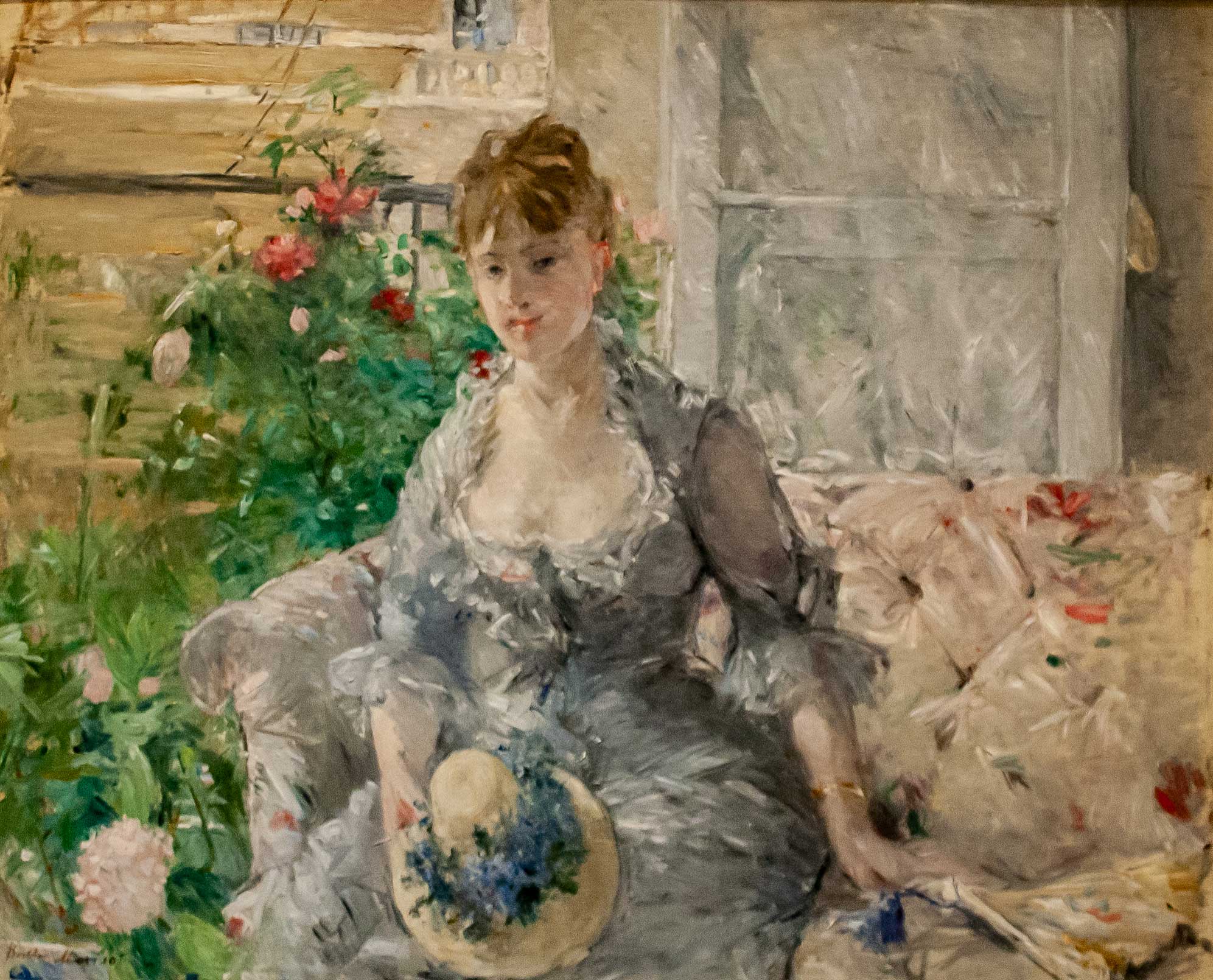
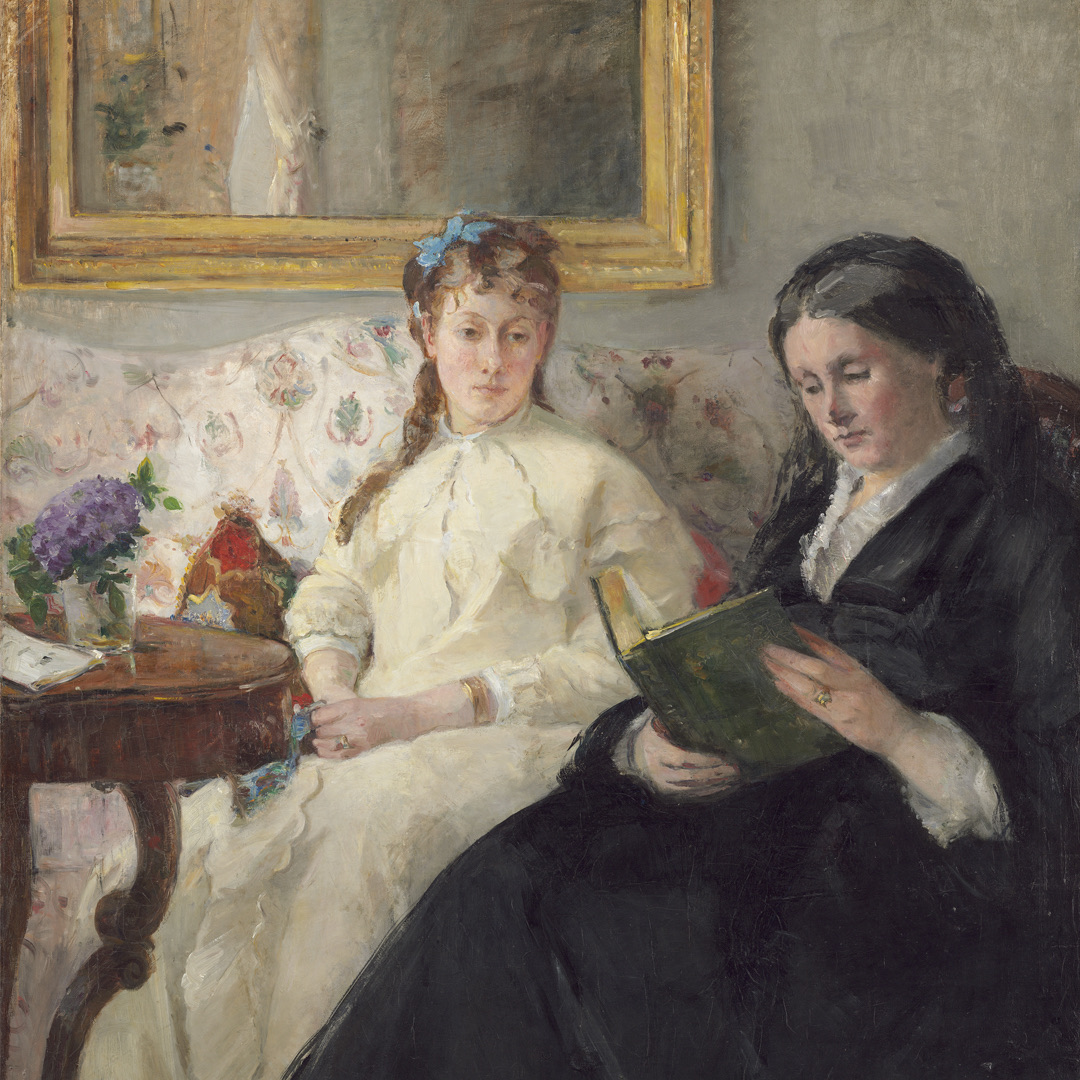
Young Woman Seated on a Sofa
Berthe Morisot, ca. 1879
A Place Deliberately Made for Work
By the early twentieth century, another idea had gathered force: the artist could shape the environment around the work.
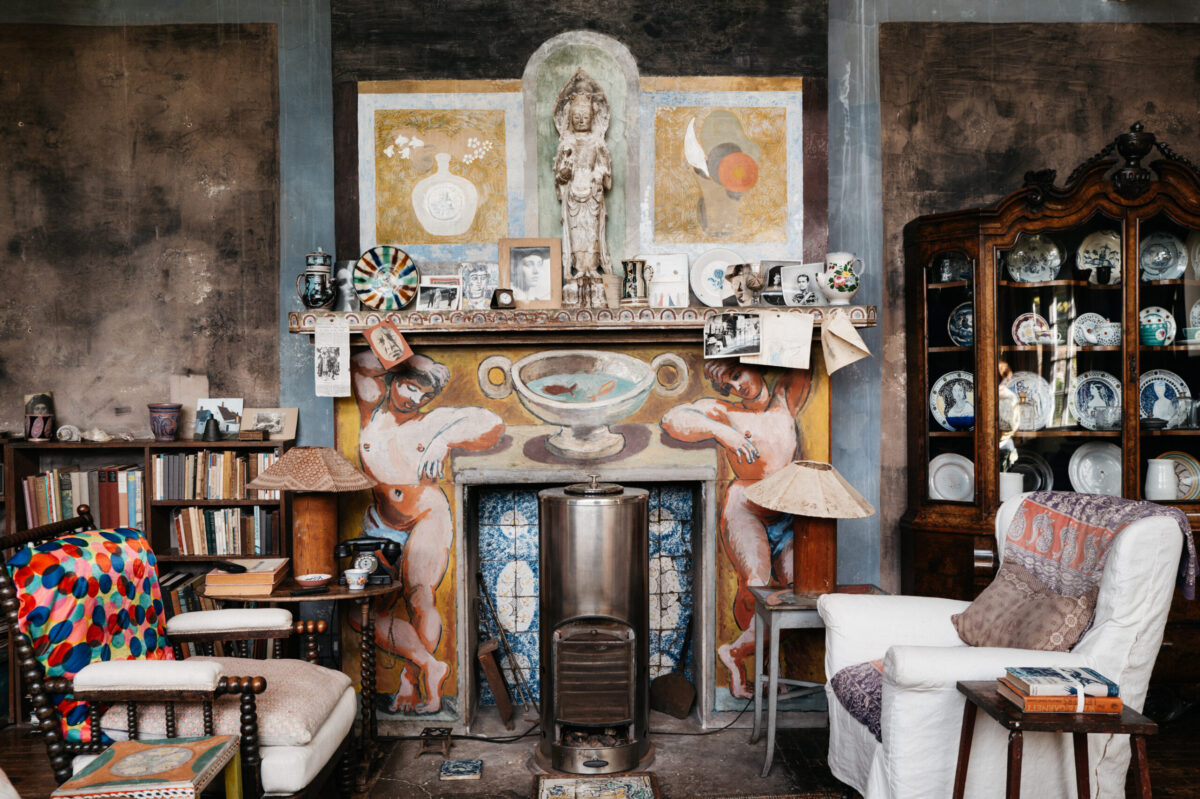
At Charleston in Sussex, Vanessa Bell and Roger Fry planned a separate studio in 1925 in what had once been a chicken run. When it was finished, Bell described the light as good and even, and the space as unusually quiet, removed from the sounds of the house and garden. The studio still holds the evidence of a creative life that ignored neat boundaries between art and daily living: painted furniture, decorated tiles, textiles, family portraits, ceramics, sketches, photographs, and children’s drawings.
That mixture feels surprisingly current. The creative room is rarely a sealed chamber untouched by ordinary life. It gathers ordinary life into itself.
Many artists have shaped gardens, houses, studios, and collections of objects around their practice. These places can become a kind of extended sketchbook. Color combinations appear on walls. Objects wait on shelves until they enter a painting years later. A window becomes familiar enough that the artist notices the exact week when the light changes.
The Takeaway
A creative room does not need to be large, picturesque, or even permanent. History gives us grand studios, shared workshops, rented rooms, kitchen tables, and spaces carved out of domestic life. The common thread is that the work has somewhere to exist.
That matters more than it sounds. When materials can remain visible, an unfinished idea keeps speaking. When a sketchbook has a familiar place, returning to it requires less ceremony. When we claim even a small area for making, we give the work a physical presence in our lives.
The history of the artist’s room is partly a history of permission: permission to learn, to take up space, to leave the work out, to consider creative labor worthy of a place of its own. November may be a good month to look around and ask a very practical question. Where does your work live when you are not working on it?
It is a perfect place to work in.
Vanessa Bell, writing to Roger Fry about her Charleston studio
Making
Room
Coming back to my own studio after a retreat season always changes the way I see it. When I have been working in other rooms for months, teaching from tables that need to be cleared before everyone leaves, I notice the luxury of leaving something exactly where I put it.
This year that feeling is stronger. Six retreats have taken me outward again and again, and now I am back in Portugal with a quieter stretch ahead. My home here is still relatively new. I am still deciding how I want to live in it, and my studio is part of that conversation.
The academic essay in this issue made me think about how much weight we place on the idea of the “proper” studio. It is easy to imagine that creative work would become more serious if only we had another room, better storage, northern light, a sink nearby, a larger table. I understand the fantasy. I can happily lose an hour thinking about beautiful studio storage.
But the useful question is smaller: what helps me return to the work?
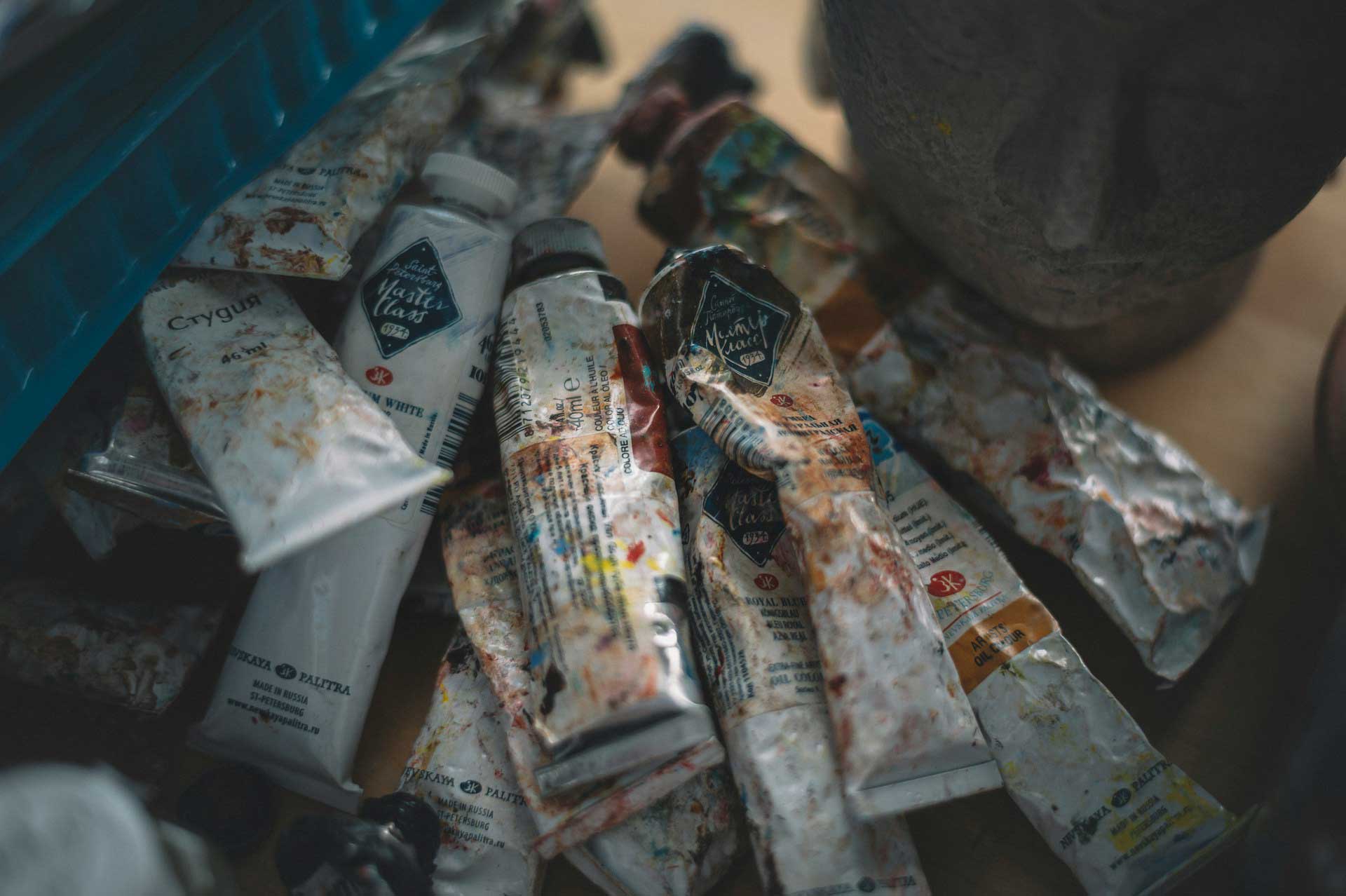
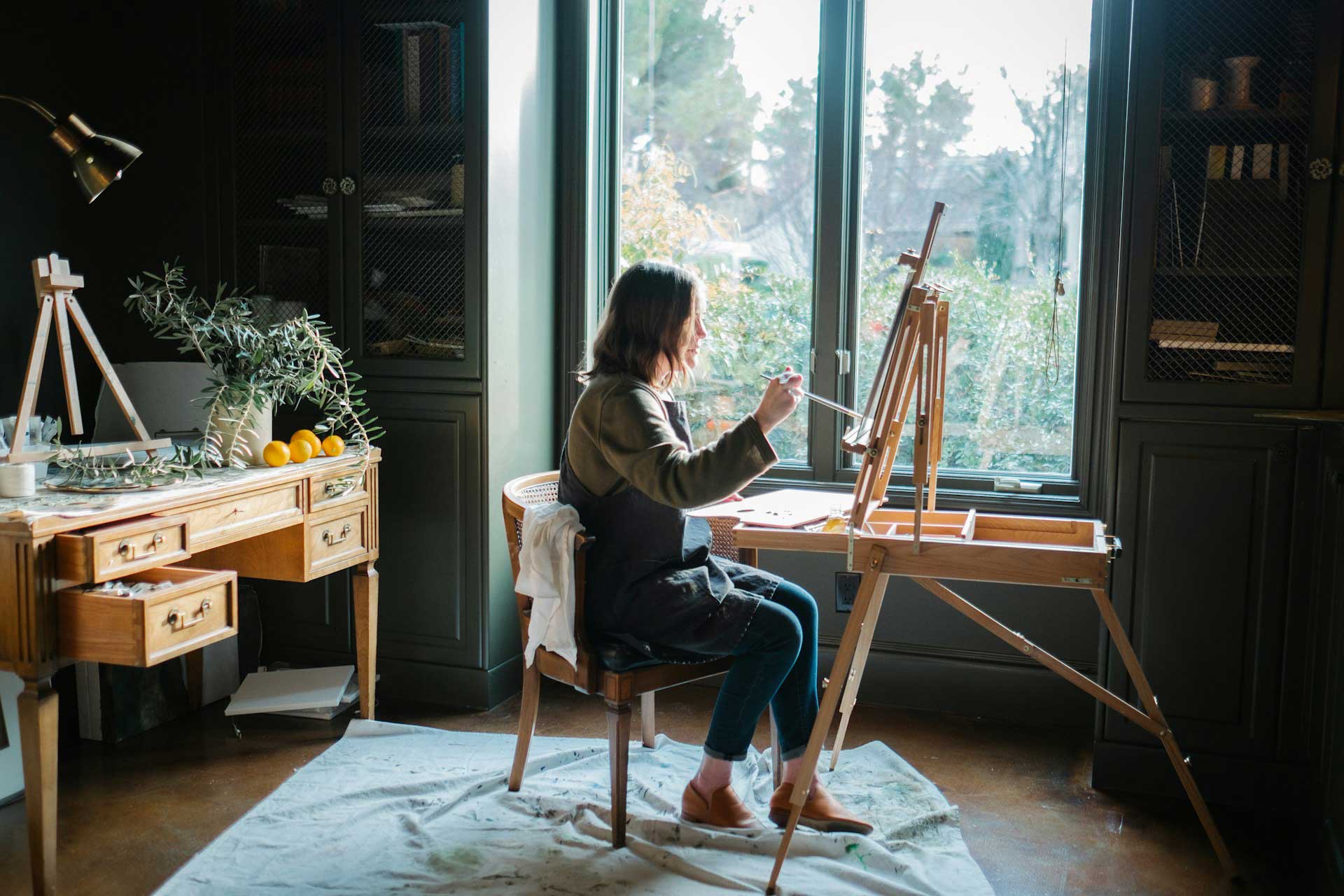
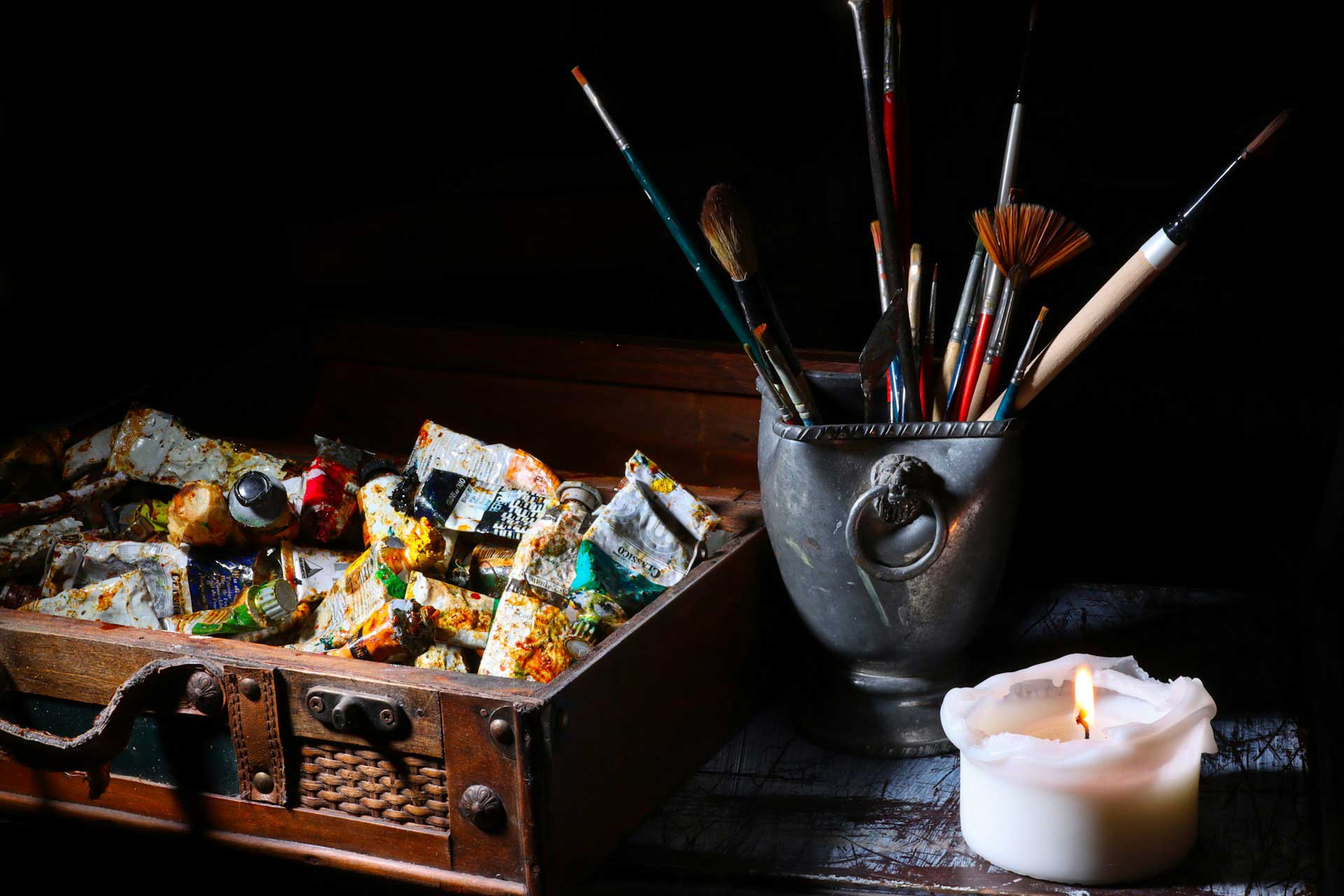
For me, visibility matters. If everything disappears into drawers and boxes, I can lose the thread of a painting surprisingly quickly. A sketch left open can pull me back in. A small pile of color studies reminds me where I was headed. The PanPastels I am using most often are far more useful within reach than arranged beautifully somewhere I cannot see them.
I also like a studio to show evidence of thinking. Reference images get taped up. One drawing ends up partly covering another. A color gets tested several times before I find the right temperature. That visual clutter can look untidy from the outside, but it keeps the conversation moving.
A working space also needs some protection. I do not mean making it precious. I mean letting it remain a working space long enough for an idea to gather momentum. Sometimes that is a whole room. Sometimes it is one end of a table that does not get cleared for a few days. A trolley can do the job. So can a basket of materials beside a chair.
The women we looked at earlier often worked around the practical limits of their lives. That history makes me less interested in the fantasy of the perfect studio and more interested in continuity. Can the work remain close enough that you can return to it tomorrow?
It all comes back to the fact that we are not asked to be perfect, only human.
May Sarton
Hearth
Hearth
Hearth
Hearth
Hearth, noun. The floor or area in front of a fireplace; by extension, the center of a home and the place where its fire is kept. A hearth asks for attention.
A fire cannot be rushed into lasting heat, and it cannot be ignored forever either. It needs fuel, air, and the occasional nudge back toward life.That image feels useful for creativity in November. A creative practice has its own temperatures. Some periods burn hot. You cannot make fast enough. One painting opens the door to another, and the ideas seem to arrive before you have somewhere to put them. Other seasons are quieter. The flame drops. The work may look almost still from the outside.I have learned not to mistake that quieter heat for absence.An old sketch can hold an ember for years. A color combination keeps returning. A subject you thought you had finished with begins to glow again at the edge of your attention. Creative continuity is often less dramatic than inspiration. It is made of small returns.
Hearth as a Creative Practice
To tend a creative hearth is to notice what still has heat in it.
Look through the pages you have made this year. Which images still tug at you? Which unfinished piece feels alive rather than abandoned? Is there a color you keep reaching for, a symbol that has appeared without being invited, or a subject you have circled more than once?
You do not have to turn every ember into a large project. Sometimes the kindest thing you can do for an idea is keep it warm. Make one small study. Pin the reference somewhere visible. Write a sentence beside it. Mix the color again. Give it ten minutes instead of demanding a finished body of work.
Creative steadiness rarely looks impressive in the moment. It can be a page made on a tired evening, a tiny drawing between larger projects, or returning to a subject after weeks away. Those small acts keep a relationship with the work alive.
A hearth also teaches us about rest. Fire settles into coals. Heat remains even when the flames are low. November can hold that slower rhythm without asking us to disappear from our practice.
The hearth is a useful counterpoint to the rush of making something new. Sometimes the work that matters is already glowing quietly in front of us.
The creation of a thousand forests is in one acorn.
Ralph Waldo Emerson
The Inner Sanctuary Spread
A three-card spread for the creative soul.
Let's tap into our creative intuition and do some self-reflective work inspired by our theme. If you are not one drawn to using oracle or tarot cards, no worries, just use the accompanying reflective questions as writing prompts for your journals.
Take a deep breath, grab a cup of tea and enjoy.
What Needs Quiet?
What part of my creative life has become crowded, noisy, or overextended?
This card asks you to notice where too many voices have entered the room. Advice, comparison, unfinished obligations, constant input, or your own habit of changing direction can all make it hard to hear what you actually want to make. Journal prompt: If I removed one source of creative noise this month, what would become easier to hear?
What Wants Tending?
What idea, practice, or feeling is asking for gentle attention now?
Look for what is still alive rather than what seems most impressive. This may be a small sketch, a medium you miss, an unfinished painting, or a curiosity that keeps returning. Give that thread a little attention before deciding what it must become. Journal prompt: What have I been quietly drawn back to, and what is one small way I can tend it?
What Belongs Within These Walls?
What do I want to consciously invite into my creative life this season?
This card is about choosing the atmosphere around your work. You might want more slowness, stronger color, experimentation, study, play, solitude, or company. Naming what belongs helps you notice what does not need to come with you. Journal prompt: If my creative life had a front door, what would I welcome across the threshold this November?

How to use this spread
Find a quiet moment before drawing your cards. Let each one arrive slowly. Notice your first response before you start interpreting it, a tightening, a warmth, a memory surfacing uninvited. Write down whatever comes, even if it feels incomplete. This spread works well with both oracle and tarot decks, and it's worth returning to more than once this month, since echoes rarely finish saying what they came to say the first time.
No need to hurry. No need to sparkle. No need to be anybody but oneself.
Virginia Woolf, A Room of One’s Own

05 · Meditation · with
Rachel Hillary
My Heart, My Home
Meditation
I chose this month’s meditation because it feels so connected to the idea of sanctuary. After a year of traveling, teaching, and moving through so many beautiful places, I’m feeling the pull to come home in every sense of the word. To my own space, my own rhythms, and that quieter place within that can get a little lost when life is full.
Here's a little more information from Rachel…
Please note: this is not a usual style of meditation, there is a little intro chat then some breath counting then the meditation fully begins. No ending bell. This is a short and sweet but very potent heart energy experience. Leading you back to the peaceful serenity and home within, and to the patient wisdom of your heart. Sometimes, we feel lost and don't know where to turn, so here we nurture our connection within.
Music by Chris Collins

Print this affirmation and keep it in your sketchbook or somewhere in your studio. Recite it out loud each time you show up to create. Saying words aloud is powerful and can begin to re-write some of our own limiting beliefs or calm our fears. Try it now.
Download the affirmation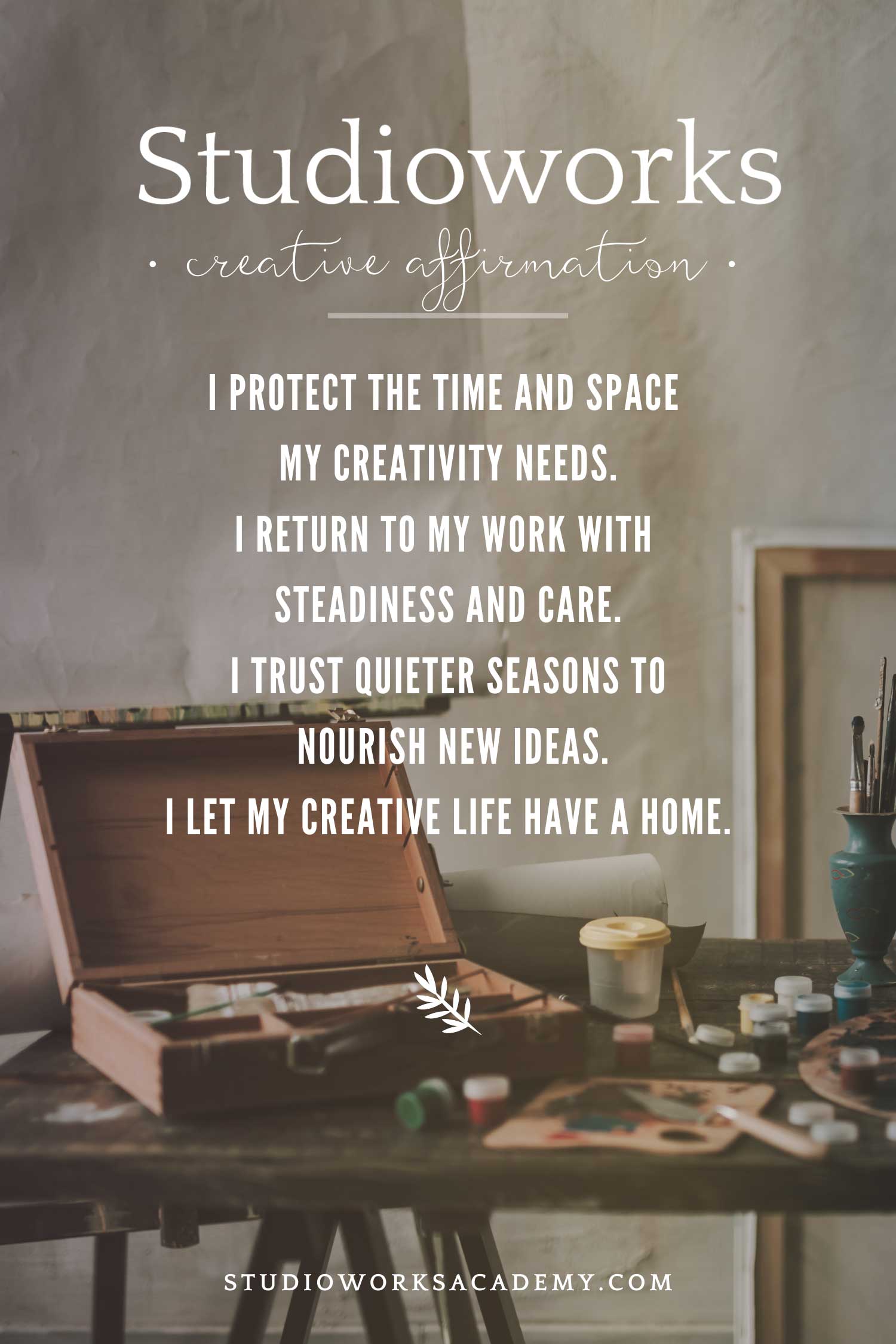
This month’s palette comes from Henri Le Sidaner’s autumn and winter paintings: dusk settling over Gerberoy, snow catching violet light, dark garden greens, pale stone, and windows glowing against the blue end of day.

The secret is temperature. Le Sidaner often gives the eye a cool field and then lets a small warm note carry remarkable emotional weight. A window does not need to be large to feel luminous when the rest of the painting has gone quiet.
Amber Lamplight: A warm golden orange for windows, lamps, reflections, and the smallest high-energy accents. Use sparingly so it keeps its glow.
Twilight Blue: A softened blue with a hint of gray or violet. This can carry skies, walls, snow shadows, and much of the atmospheric middle value.
Moss Green: A subdued garden green for foliage, shutters, hedges, and shadowed plant forms. Keep it muted rather than fresh or springlike.
Faded Rose: A dusty pink for flowers, reflected warmth, brick, and small passages that bridge the cool and warm sides of the palette.
Plum Shadow: A muted purple-red for dusk, deep foliage, and cooler darks. Useful when black feels too dead or heavy.
Chalked Stone: A pale cream-gray for paths, walls, table linen, snow light, and breathing room between denser colors.
Walnut Brown: A grounding brown for branches, furniture, roofs, window frames, and structure. Mix it into other colors to quiet them.
Try allowing Twilight Blue, Moss Green, and Chalked Stone to do most of the work. Walnut Brown and Plum Shadow can deepen the structure. Faded Rose is a bridge. Then place Amber Lamplight where you want the eye to pause.
Light and color… remain the basis of the chosen theme.
Henri Le Sidaner, 1935
Henri
Le Sidaner
The Warmth Between Day and Night
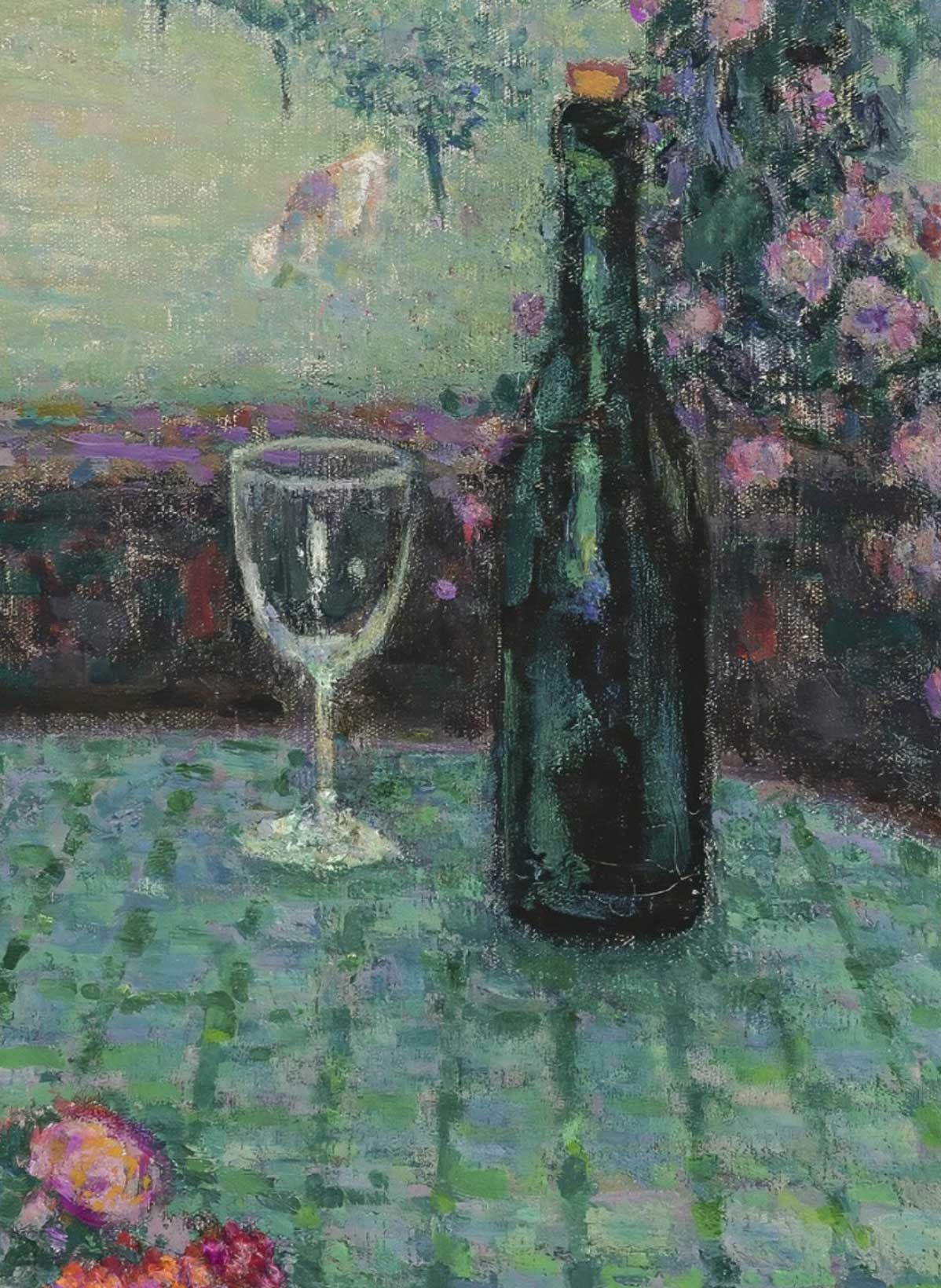
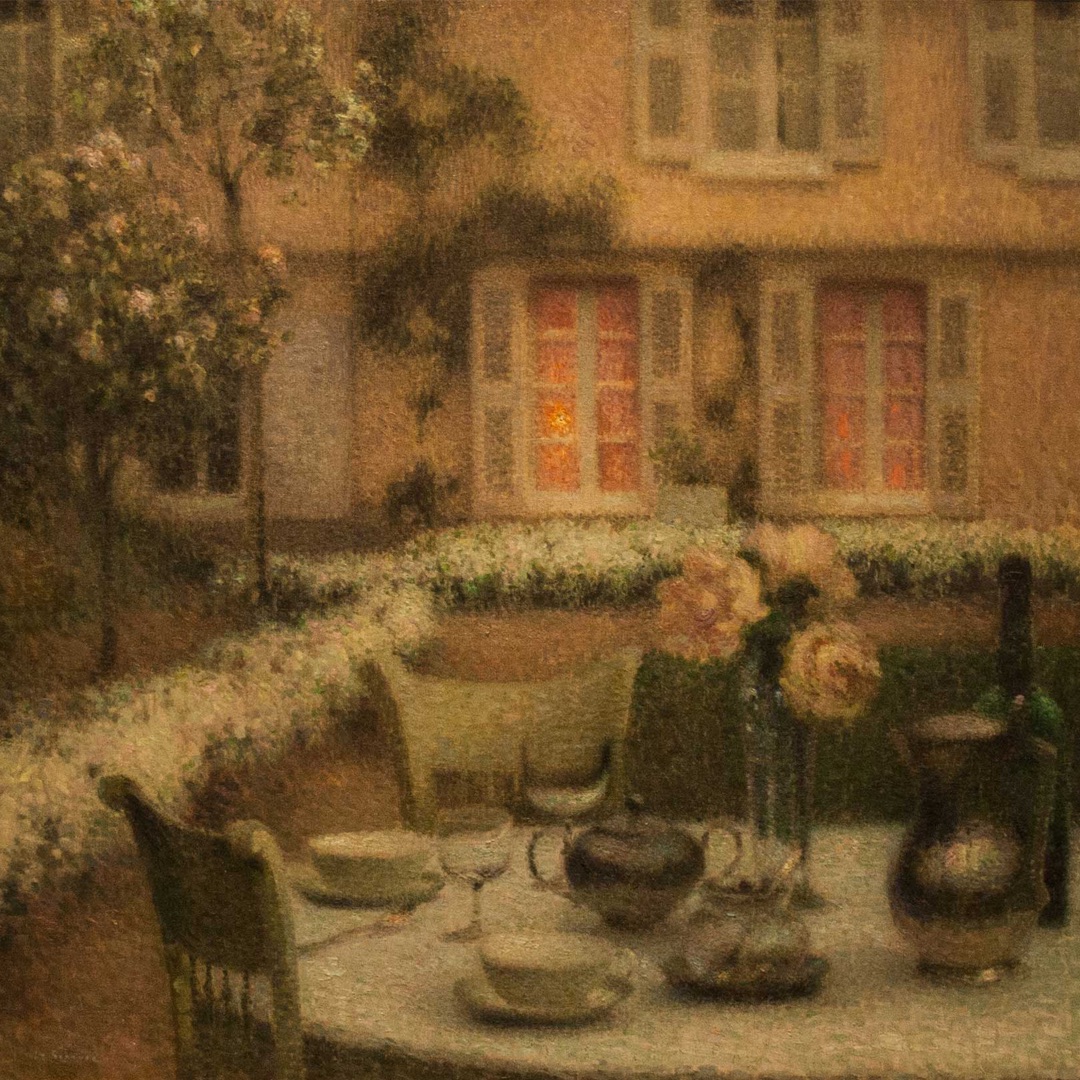
A table is set in a garden at Gerberoy. White cloth. Glassware. Fruit. A chair pushed close. The people are gone, or perhaps they have not arrived yet. Behind the table, the house is beginning to glow as daylight thins.
Henri Le Sidaner returned to this kind of scene again and again. A window lit at dusk. A courtyard after rain. Snow turning lavender in the last light. A table prepared for company, left mysteriously empty. He could make a place feel inhabited without painting a single figure.
That quiet presence is one reason his work feels so right for November. The paintings rarely shout. They draw us toward the threshold between outside and in, day and evening, cool air and warm rooms.
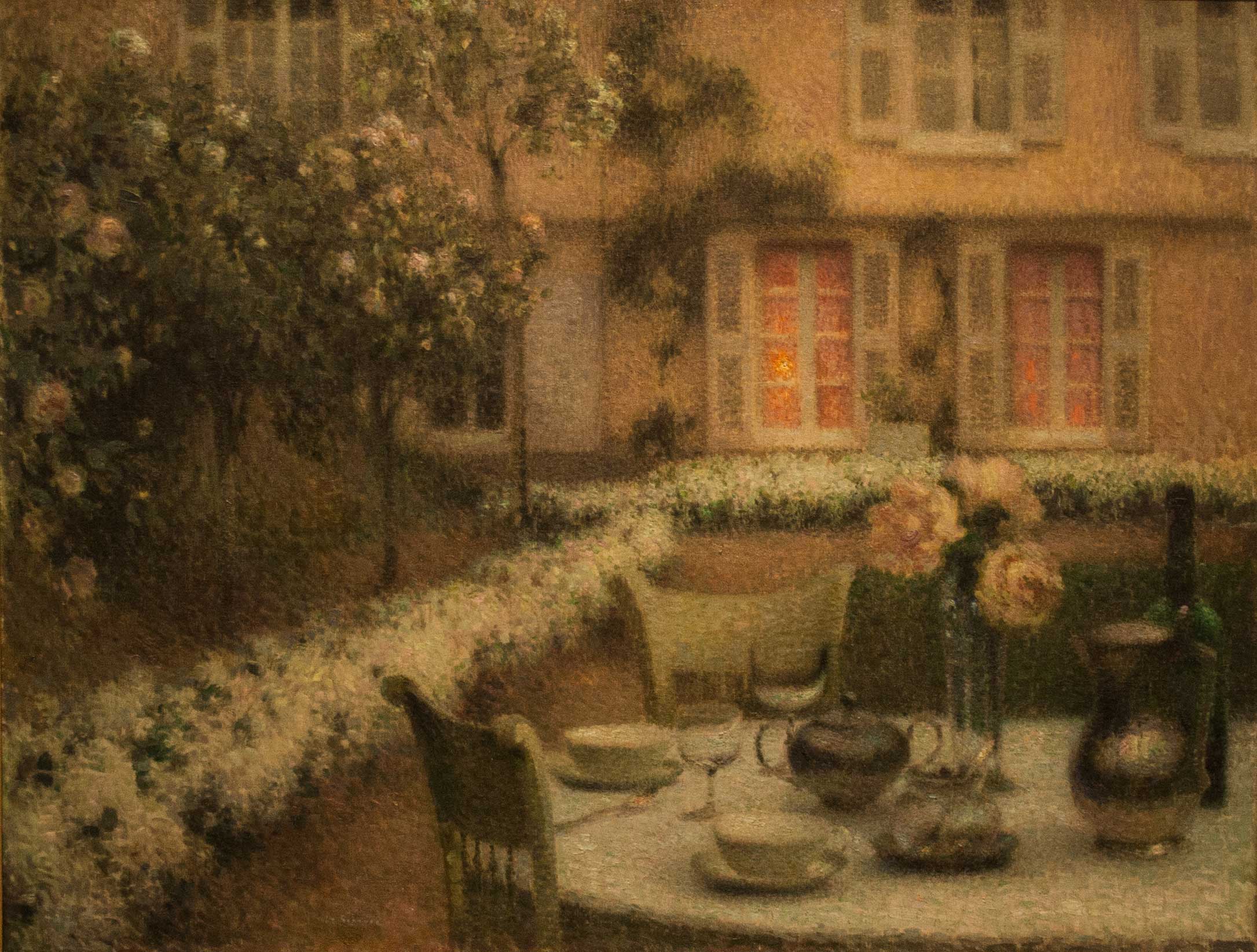
La Table
Henri Le Sidaner, 1901
From the Academy to Atmosphere
Henri Eugène Augustin Le Sidaner was born in 1862 in Port Louis, Mauritius, and his family later settled in Dunkirk, France. He studied at the École des Beaux-Arts in Paris under Alexandre Cabanel, one of the leading academic painters of the period, but the formal academic environment did not hold him for long.
In the mid-1880s he moved to Étaples on the northern French coast. There, away from Paris, he worked from landscape and absorbed the lessons of Impressionism. During the 1890s his art also moved toward Symbolism. Figures in pale clothing appeared in dim gardens and quiet landscapes, and atmosphere began to carry as much meaning as subject.
By the turn of the century, those figures largely disappeared. Rooms, streets, windows, gardens, tables, and architecture took their place. The absence became part of the mood.
Gerberoy: Making a Place to Paint
Le Sidaner first visited the medieval village of Gerberoy in 1901 and was taken by its quiet streets, timbered houses, and changing light. He later acquired property there and spent years shaping the house and grounds. Gerberoy became central to his mature work for almost four decades.
He did more than find a picturesque village and paint what was already there. He altered his surroundings. Buildings were repaired and expanded. Gardens were planned. Courtyards, terraces, pavilions, and planted areas were arranged so architecture and vegetation could work together.
This matters when we look at the paintings. The garden was both lived space and visual material. He knew how the house looked at evening because he had watched it repeatedly. He knew where snow sat on the steps, how shutters darkened against a pale wall, how a lit window changed the balance of a whole façade.
The early biographer and critic Camille Mauclair called Gerberoy Le Sidaner’s “asylum pacis,” a place of peace and family life. The phrase suits the work because Gerberoy was not simply a retreat from the city. It became an environment that fed his practice year after year.
The Hour Between
Le Sidaner loved unstable light. Dusk gave him exactly what he needed: the landscape was still visible, but local color began to loosen. Blues moved toward violet. Greens sank into shadow. A small artificial light suddenly became intense.
This is where his paintings can teach us a great deal about color temperature. He often built a scene from close, muted relationships and then introduced a warmer note. Amber windows against blue snow. Rose light against gray-lilac sky. A pale tablecloth surrounded by dark garden green.
The effect depends on restraint. If everything glowed, nothing would glow.
His autumn and winter works make this especially clear. In Neige, le vieux village. Gerberoy, painted in the winter of 1902, snow changes the village into a field of cool light. In later snow scenes, lavender and blue notes move through white paths while windows carry warmer pinks and ambers. The buildings remain solid enough to anchor the image, but edges soften as atmosphere takes over.
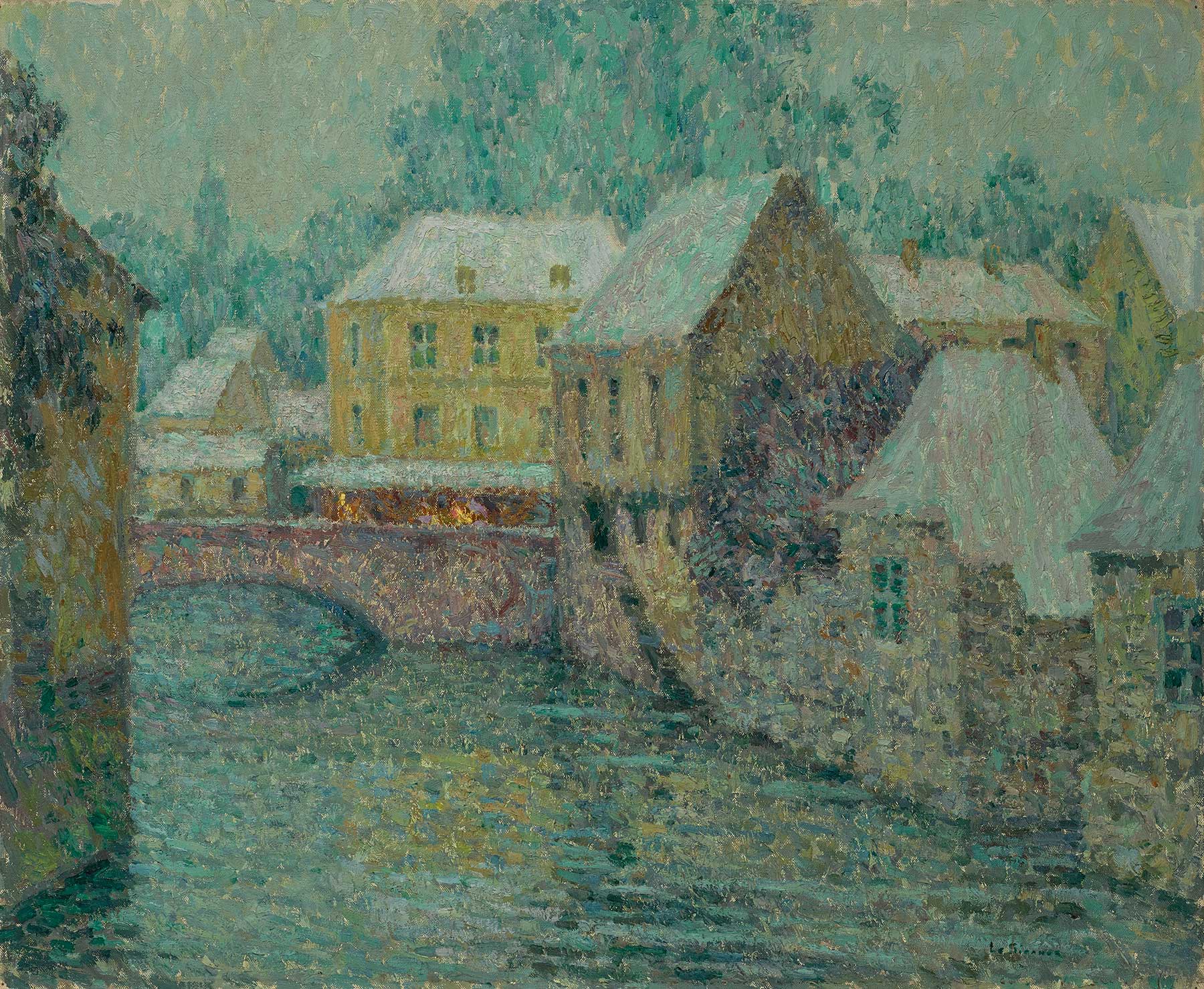
Neige, le vieux village. Gerberoy
Henri Le Sidaner, 1902
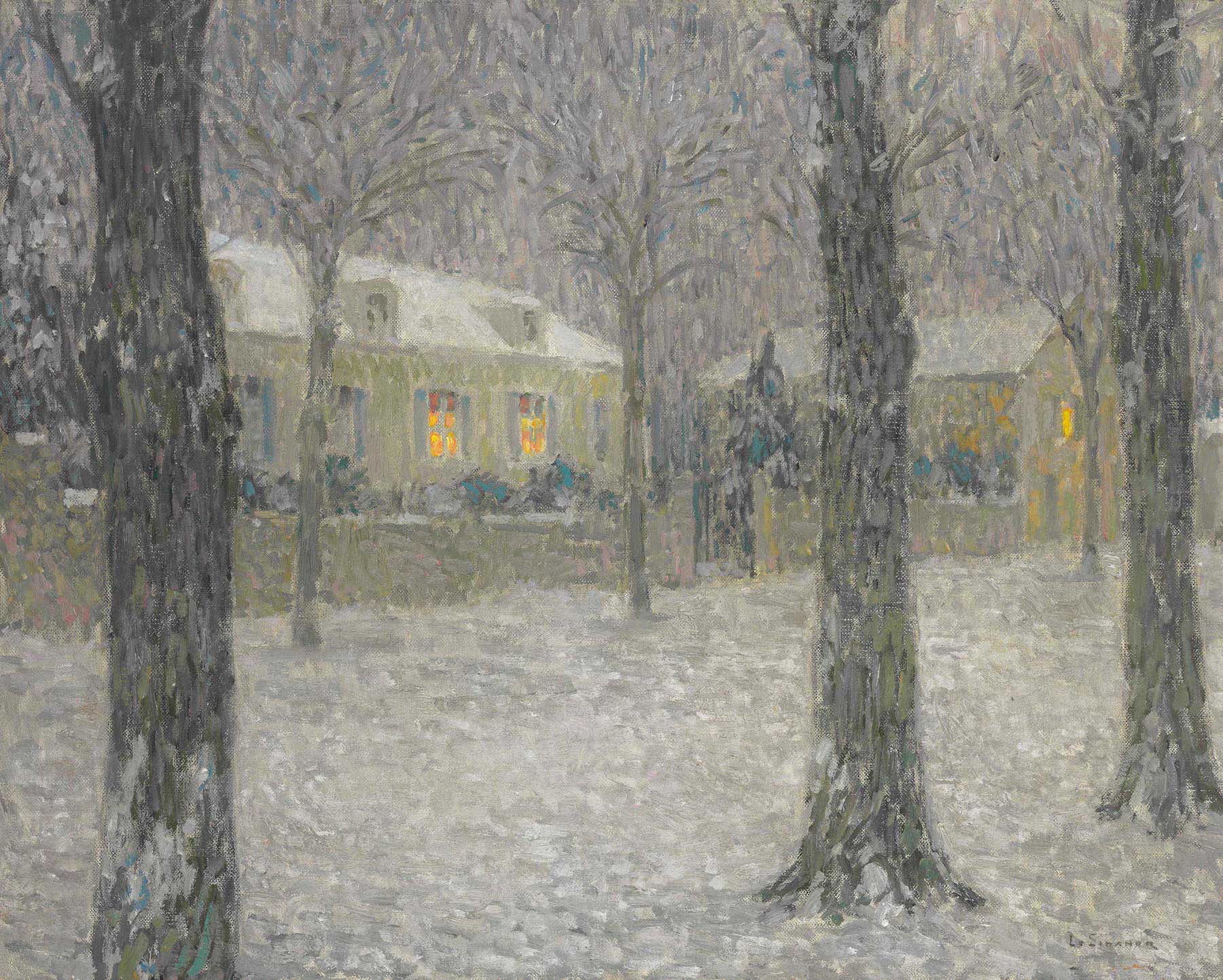
Neige, Boulevard de la Reine
Henri Le Sidaner, 1928
The Empty Table
Among Le Sidaner’s most memorable motifs are tables prepared for people who never appear.
La Table, painted in 1901 and acquired by the French state at the 1902 Salon, shows a table, chairs, fruit, glassware, and a house beyond. The human story is implied through arrangement. Someone placed the cloth. Someone brought the fruit. Someone will sit in the chair.
Later paintings return to the same quiet drama: roses in a vase, apples on a plate, jugs, a window open to the courtyard. These objects are ordinary, but their placement creates expectancy. The viewer arrives during a pause.
This is a useful lesson for artists who want to create mood without illustrating a narrative too literally. Evidence can be more evocative than explanation. A cup can suggest a person. A lit room can suggest welcome. An empty chair can hold more emotional charge than a carefully painted face.
Technique, Materials, and the Making of Atmosphere
Le Sidaner’s mature paintings are most often associated with oil, and many of the Gerberoy works were painted in oil on canvas or panel. He also used pastel, watercolor, pencil, colored pencil, and combinations of drawing and paint. Some works begin with pencil under oil. Others use pastel on linen or mixed drawing media on paper.
His technique sits between several traditions. Critics noticed the broken, dappled surface and sometimes described him in relation to Pointillism or Neo-Impressionism, but he did not use the strict system of unmixed dots associated with Seurat. His color is more blended and atmospheric. Jacques Bashet described a varied, subtle palette in which the oils bind and melt into delicate harmonies and contours emerge through light.
Le Sidaner also did not simply stand outdoors and finish every canvas directly from nature. He made careful observations and quick studies, then developed compositions back in the studio. That helps explain the balance between observed light and deliberate arrangement. The paintings feel immediate, yet the table, window, hedge, or staircase often sits exactly where the composition needs it.
For a modern painter, several techniques are worth borrowing. Soften selected edges instead of outlining every form. Let close-value passages merge. Use color temperature to separate light from shadow. Place the strongest warm note late. And resist the urge to describe every object with equal clarity.
Pastel artists can learn a great deal from this too. His snow scenes and twilight passages depend on layered color rather than hard contour, and that translates naturally into pastel. Watercolor and gouache painters can study the same relationships by keeping larger washes quiet and reserving a few warmer, denser notes for the light.
Winter Quiet
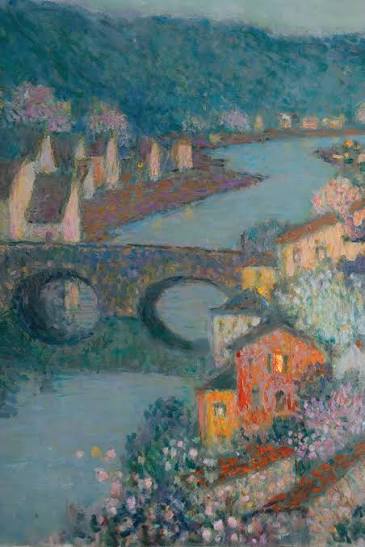
Gerberoy was not Le Sidaner’s only winter subject. He spent many winters in Versailles and painted pavilions, streets, canals, and snow-covered architecture elsewhere in France. These paintings strip away some of the floral abundance people associate with his gardens and reveal how strong his compositions are when very little is happening.
Snow simplifies. Paths become pale shapes. Rooflines sharpen. Bare branches make fine dark marks against the sky. Then a window lights up and the whole scene changes temperature.
In Les marches du jardin, painted after snowfall at Gerberoy in 1931, the garden steps hold the hush of fresh snow. In Le Pavillon français sous la neige, Versailles, painted in 1916, architecture and weather do almost all the work. These are paintings of looking slowly.
They also remind us that seasonal subjects do not require seasonal clichés. Le Sidaner rarely needs a roaring fire or crowded holiday table. A few degrees of color are enough.
What We Can Borrow
Le Sidaner’s paintings make atmosphere feel tangible. He builds it from practical painterly choices: close values, softened edges, controlled contrast, temperature shifts, and careful placement of light.
For the artist working now, that is wonderfully freeing. You do not need a dramatic subject to make a painting feel emotionally charged. Paint the window near sunset. Paint a chair before someone sits down. Paint the cool room and let one lamp carry the warmth. Paint the garden after the color has almost disappeared.
His work also returns us to the larger theme of this issue. A place becomes meaningful through attention. Gerberoy mattered because Le Sidaner kept looking at it, shaping it, painting it, and noticing how it changed.
That kind of looking can begin very close to home.

Exploring Warmth in
Cool Light
Warm Light, Cool World
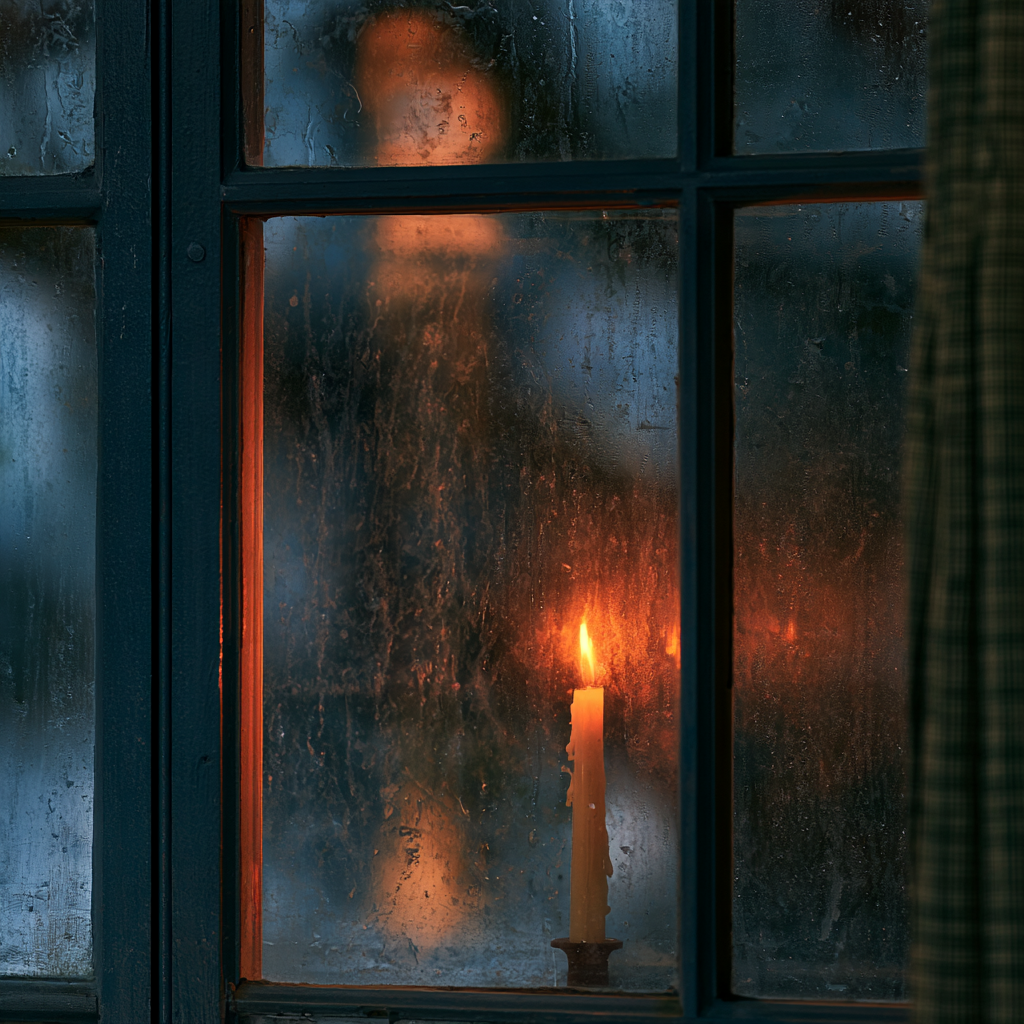
Choose a simple evening subject with one warm light source. It could be a lit window seen from outside, a lamp in a dim room, a doorway, a candle, or a small table near a light. Create a study of this in whatever medium you like. Make sure to keep the tones around the light source cool so the light source will look warm.
A Tended Corner
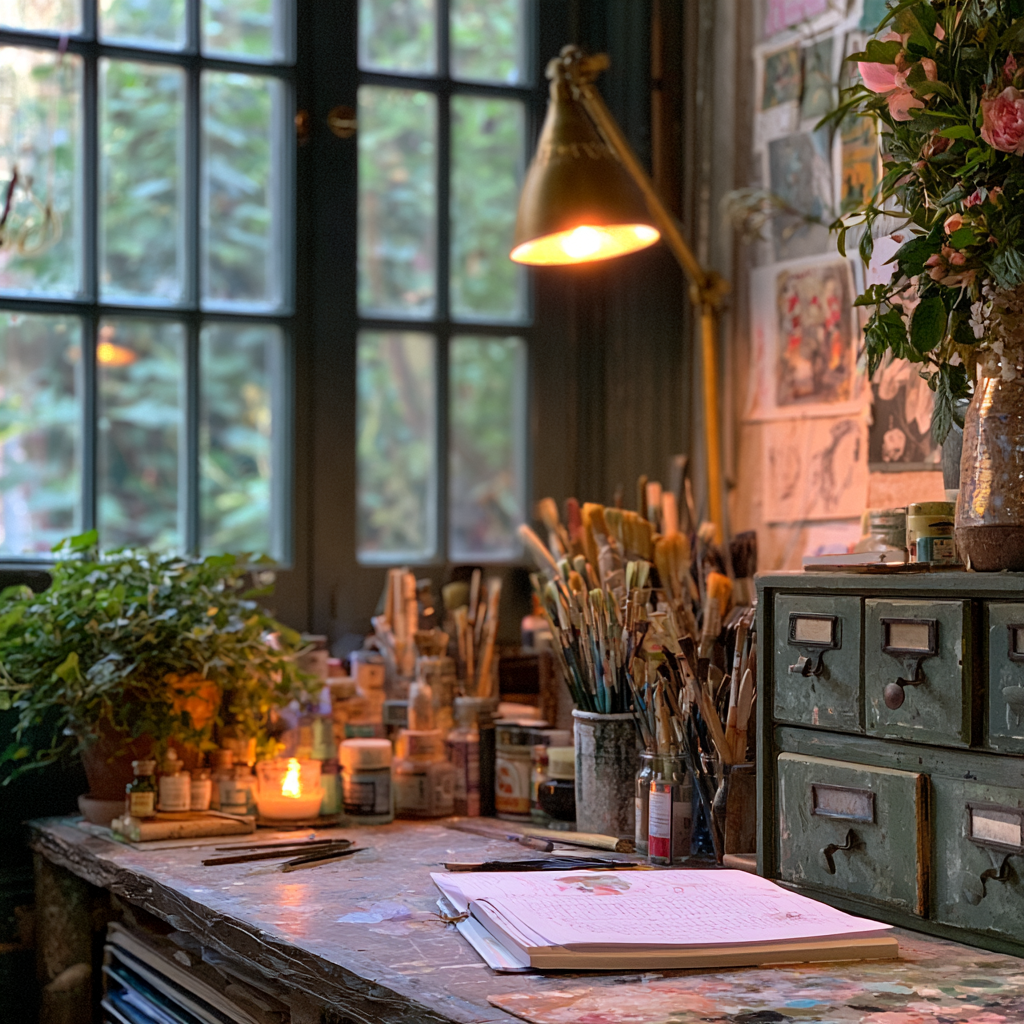
Choose one small area of your own home or studio that carries evidence of care. Avoid staging an entire room. A shelf, worktable, favorite chair, vase, cluster of brushes, stack of books, or window corner is enough. Photograph or sketch the corner as it actually is.
Master Study: Henri Le Sidaner
Choose one Le Sidaner painting that inspires you and reminds you of sanctuary. Do a small study of it in your sketchbook in whatever medium you enjoy. Pay close attention to his colors and their temperature. This isn’t about making a replica but rather a lovely opportunity to revel in the beauty of his work while honing your observational skills
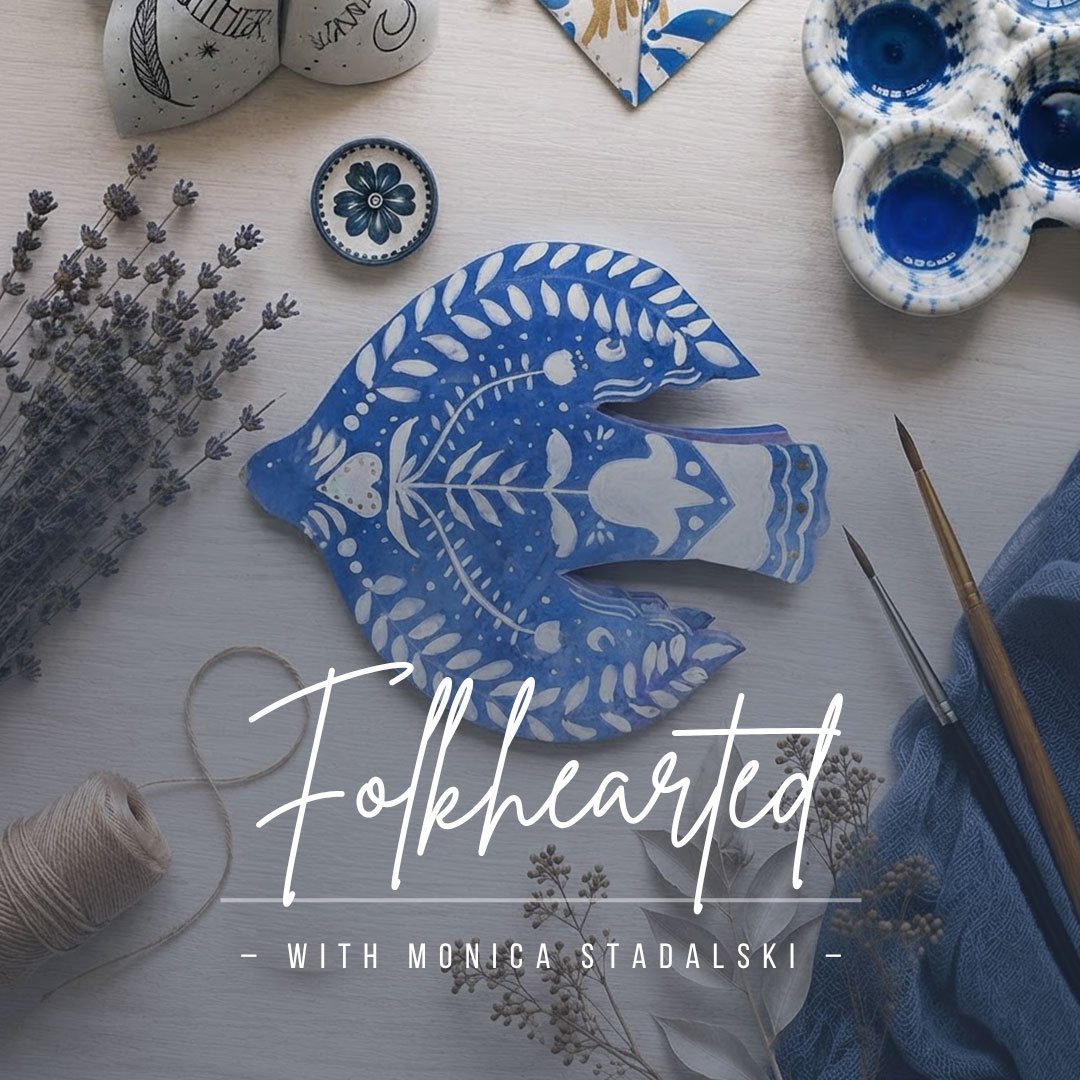
Folkhearted
Monica Stadalski
This playful class feels so at home inside our theme of sanctuary. Monica invites us to work with simple folk-inspired marks, patterns, symbols, and meaningful words, slowly building a piece that feels personal and lovingly made. I especially love the tiny heart talisman tucked inside the finished bird. It feels like a little creative keepsake, made by hand and held close.
Issue No. 95
You can also listen to this month’s issue of the Studioworks journal. I find I love listening to books, podcasts and music while I draw, paint or go on a long walk. I hope you enjoy...

One of my favorite things to do is to curate inspiration. From Pinterest boards to books, resources, playlists and more - I love to share anything that might facilitate learning, expansion, and sparks of curiosity! Being an artist, we naturally crave these things so here are some of this month’s picks from me to you.
Books to discover & enjoy
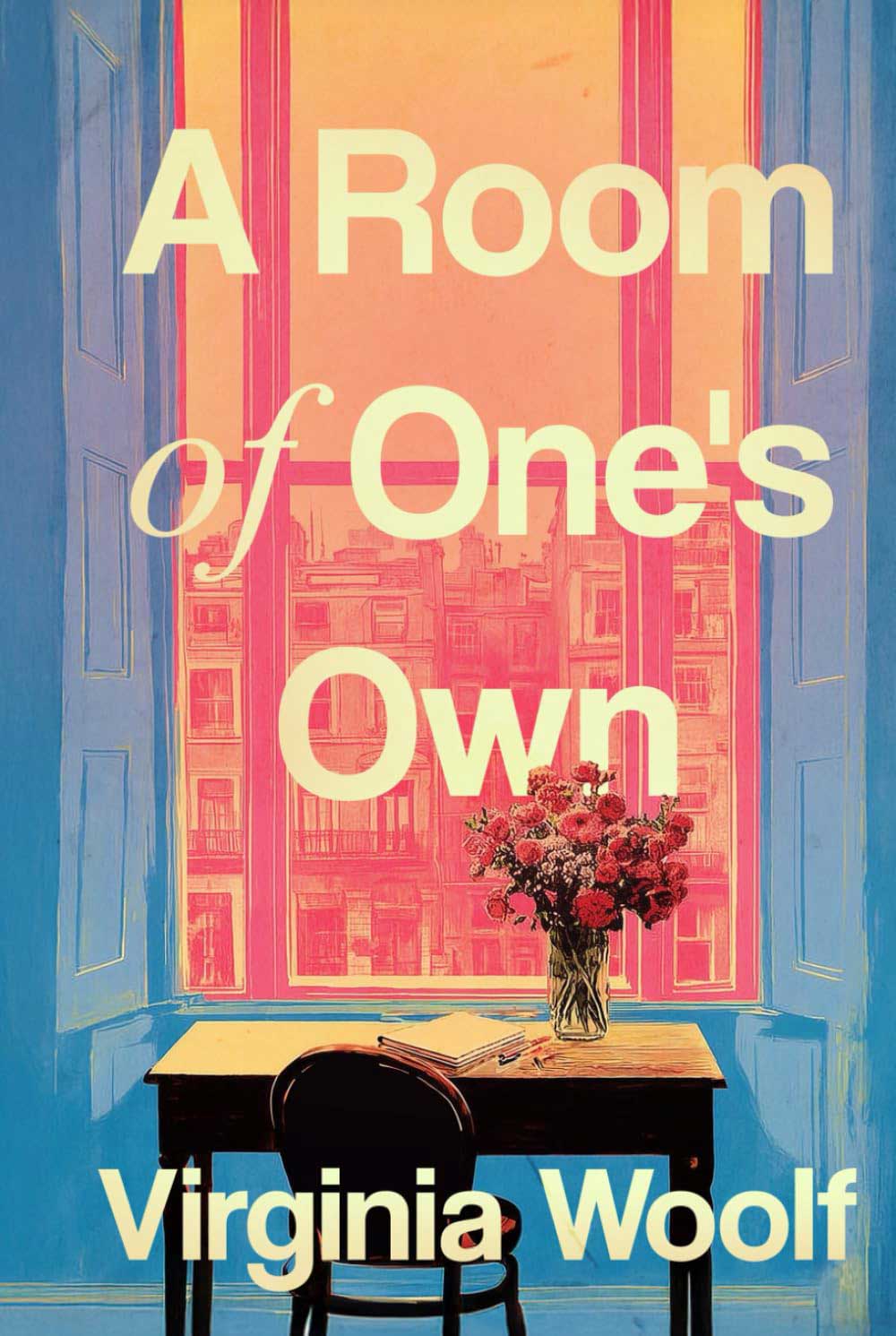
A Room of One’s Own by Virginia Woolf. Woolf’s 1929 essay begins with a material truth that still lands: creative work needs time, independence, and some form of space in which to exist. It pairs beautifully with this month’s history of the artist’s room, especially the long negotiation women have made around access, privacy, and serious creative work.
View the book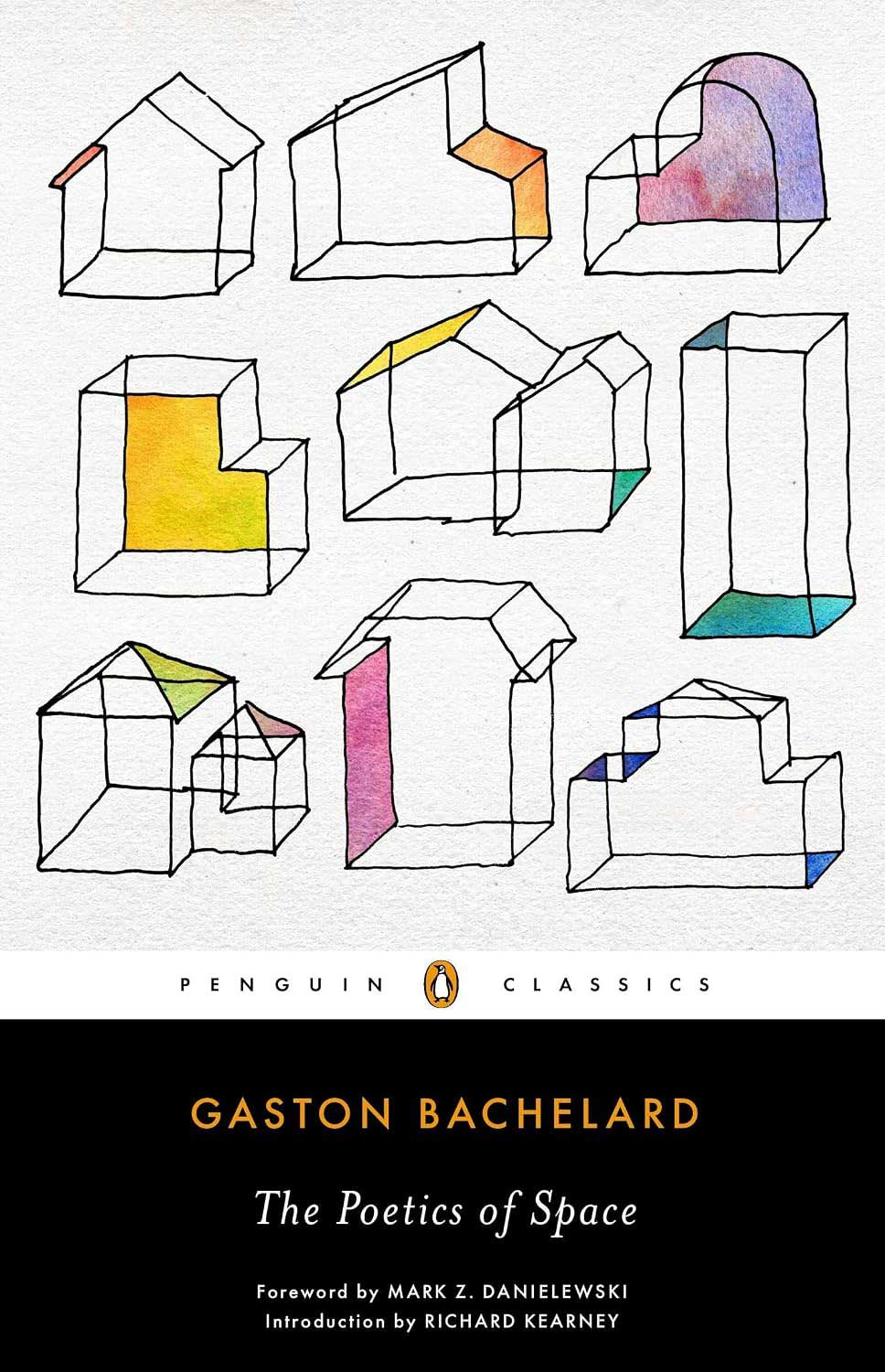
The Poetics of Space by Gaston Bachelard. Bachelard looks at houses, rooms, corners, drawers, nests, and other intimate spaces as places where memory and imagination gather. It is philosophical rather than practical, but artists may find themselves looking differently at the ordinary architecture of their own lives after reading it.
View the book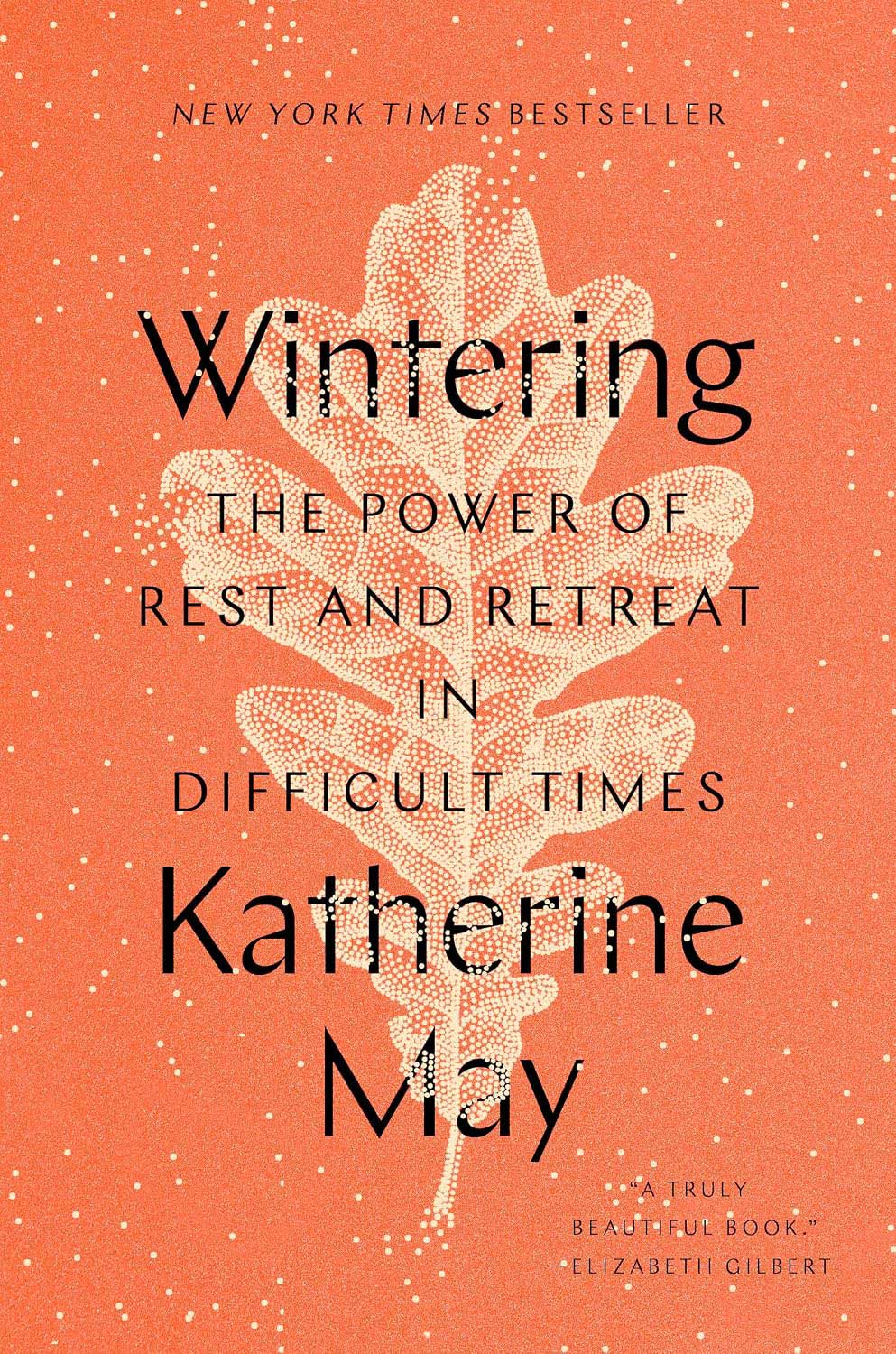
Wintering by Katherine May. A thoughtful companion for the seasonal turn in this issue. May writes about periods when life becomes quieter, slower, or less outward, and treats those seasons as part of a larger rhythm. For November, it offers a useful counterweight to the pressure to keep producing at the same pace all year.
View the bookMusic playlist
I had so much fun curating this list. I hope you enjoy!!
Pinterest board
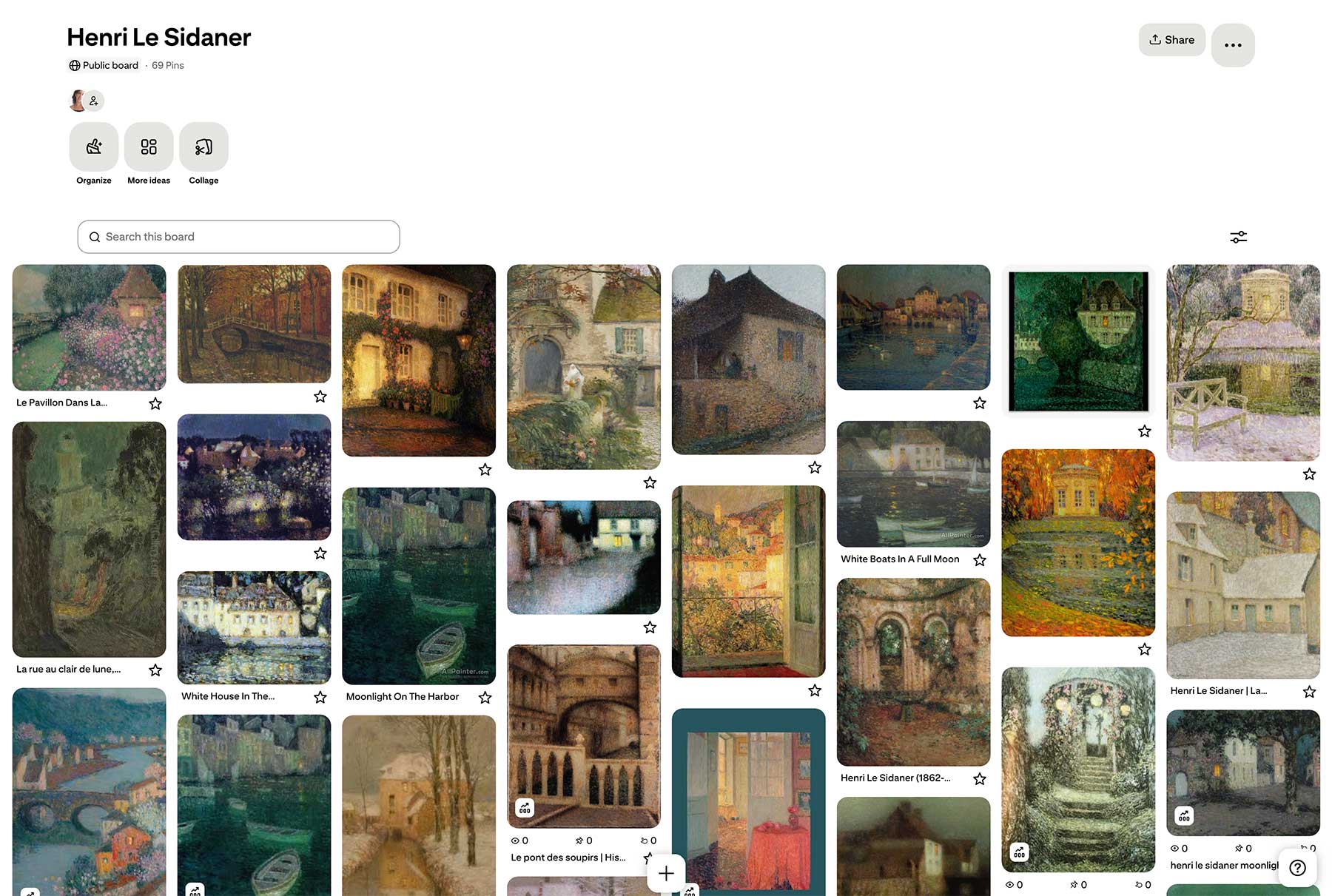
Your Studioworks Library is full of goodness…
Classes that pair well with this month’s theme in your Studioworks Creative Library

Alpine Evening
Nicole Warrington
This class feels like such a lovely companion to our theme of sanctuary. Nicole invites us into the quiet beauty of mountain landscapes through miniature watercolor and ink studies, where a limited palette, simple shapes, and repetition help the work feel calm and intimate. I especially love the idea of taking something as vast as a mountain and bringing it into the small, personal space of a sketchbook.
Explore the class
Winter Findings
Kristy Kensinger
This class feels made for the quieter season we’re stepping into. Kristy works with muted jewel tones, fluid washes, winter landscapes, and small natural findings gathered from the world around her. I love how the class encourages us to notice what winter leaves behind, then bring those textures and colors back into the sketchbook. It feels reflective, intuitive, and perfectly at home with our theme of sanctuary.
Explore the class
Ethereal Encaustics
Donna Martin
This class fits our theme in such a tactile, beautiful way. Donna builds her encaustic pieces slowly through fabric, photographs, collage, paint, and wax, creating layers that feel held, protected, and full of memory. I love the idea of gathering meaningful fragments and preserving them beneath that soft veil of wax. The finished pieces feel intimate and storied, almost like small visual sanctuaries.
Explore the classIssue No. 95
May you find sanctuary in the small, quiet moments of making.
Remember that your creativity will always be a place to call home.
Back to Studioworks